
By Julian Hardyman
A baby tenrec out for a walk - endearing but a picture of both vulnerability and potential. How it needs both nurture and protection.
Many of the churches in our region are similar. Young, vulnerable but full of the potential that comes with the presence of the Holy Spirit making real the Word of God.
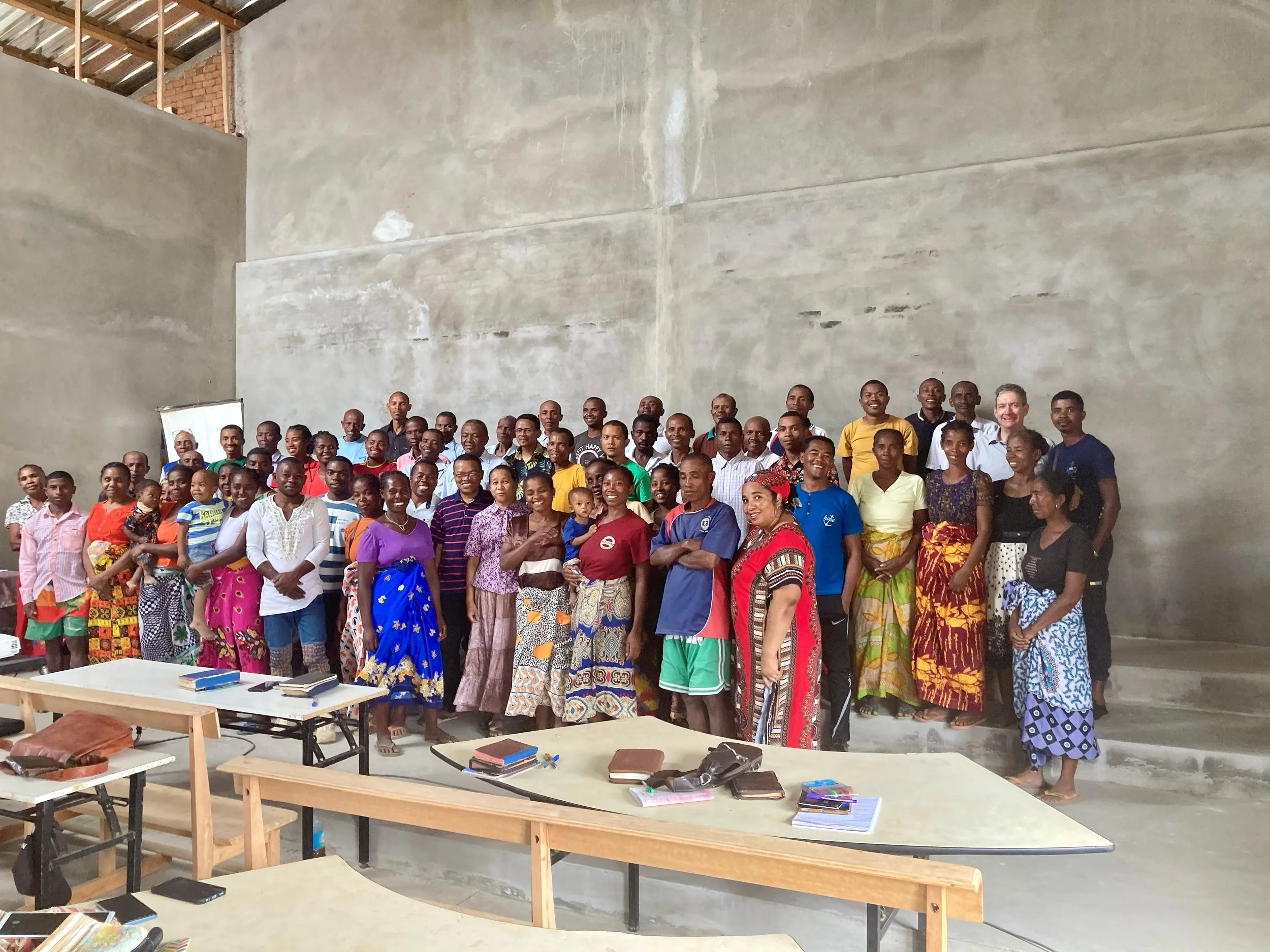
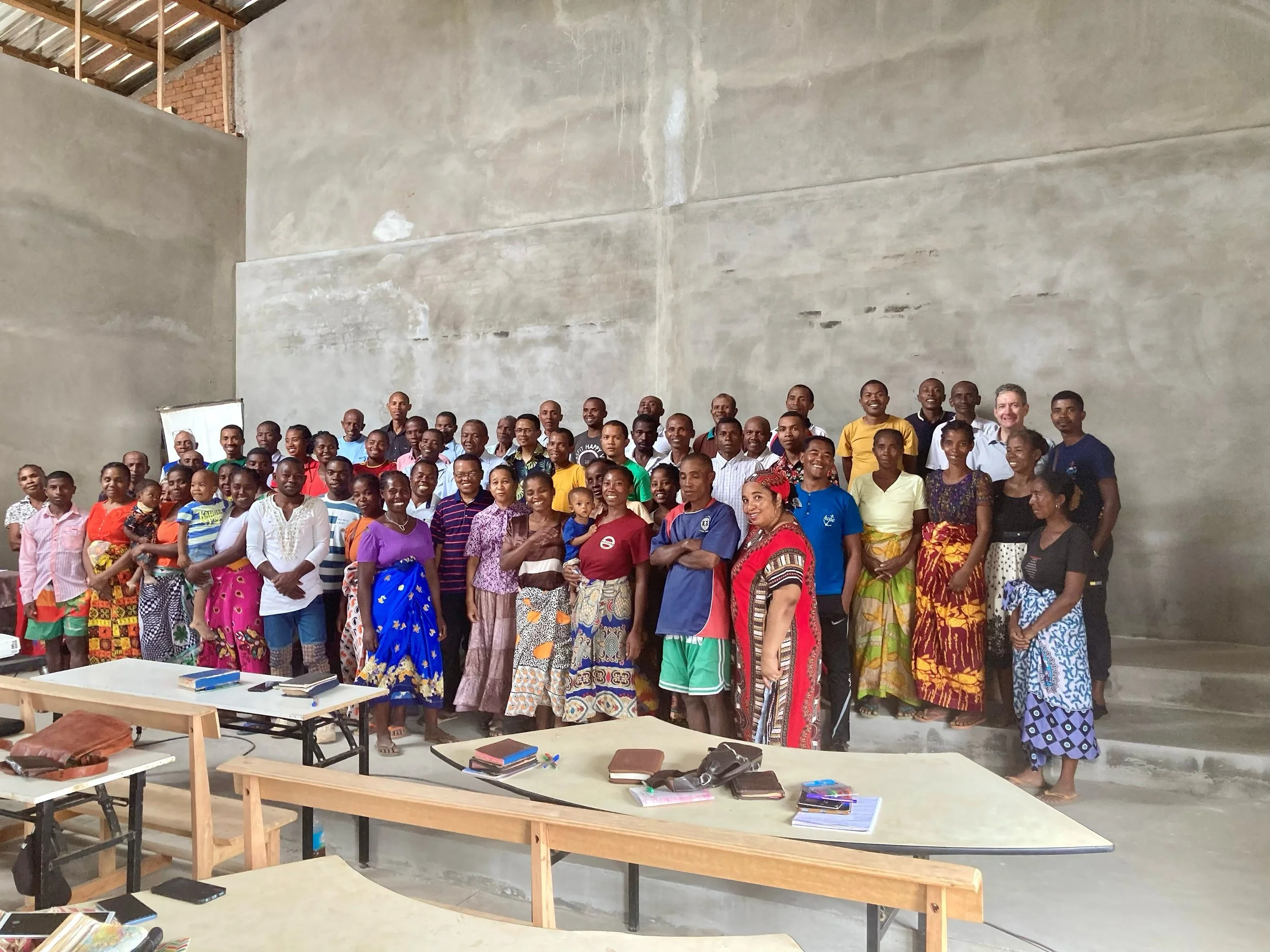
Meeting of church delegates
Last year a group of church leaders from all over the region was appointed by delegates from the churches as a Regional Board to coordinate the work of evangelism, church support and leadership development in the region. As far as I know this has never happened before and it seemed to me to represent a very positive step forward.
Early in 2026 they met to pool their knowledge of the nine different sectors and to assess the spiritual state and needs of the churches. Many of the little village churches were classified as ‘vulnerable’. So the team came up with a well-crafted plan for support, outreach and training.
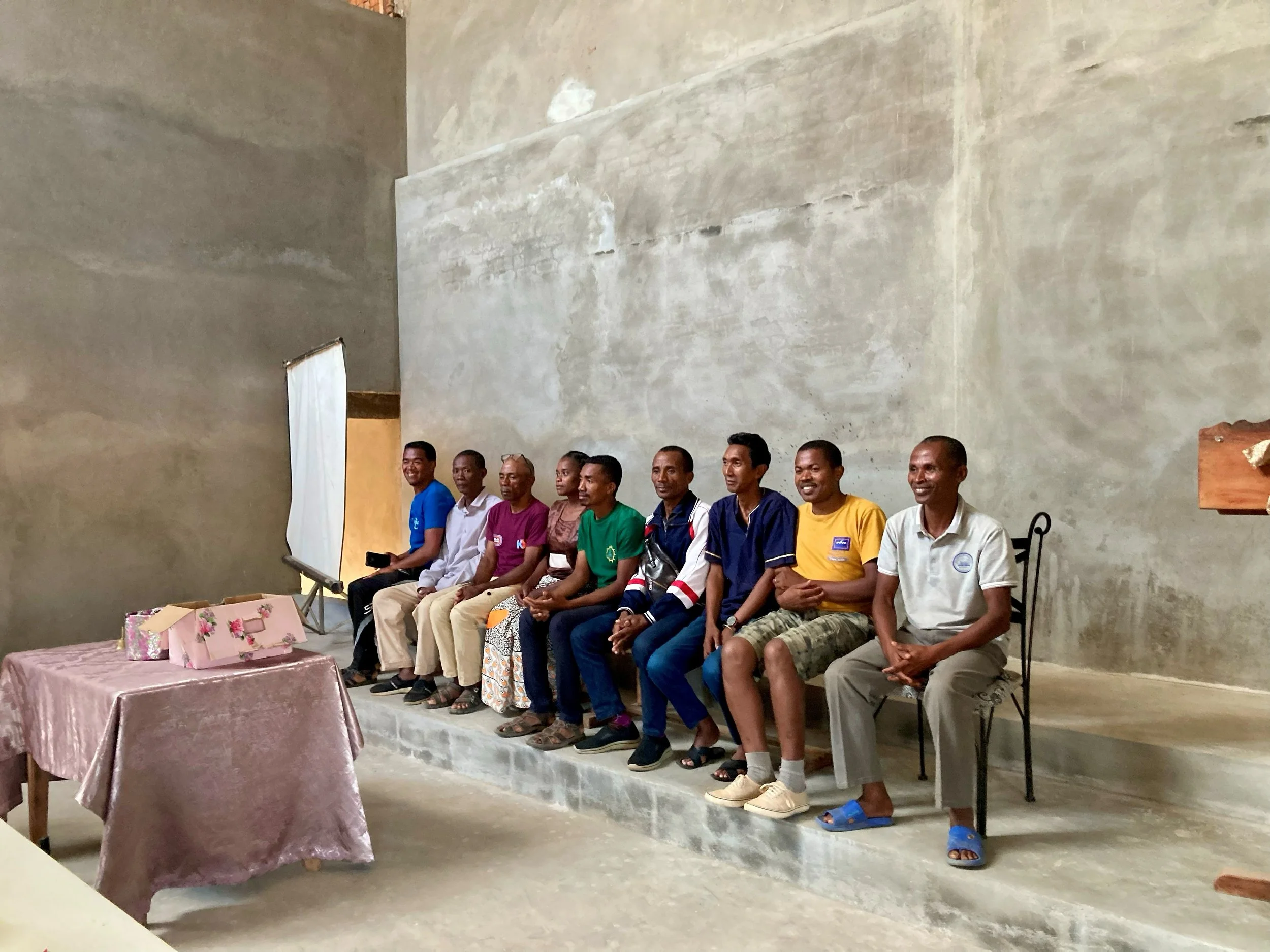
Outreach and training support committee
This will involve experienced church leaders (plus some hospital staff from the Community Health and Evangelists departments), divided into small teams and allocated to the nine different sectors for concentrated attention over the next few months. Looking down the plan, I was struck that many have committed to working extremely hard during this time. I confess I am not sure I could match the work rate!
I have been put in a little team to work with six to seven churches in villages on the edge of the eastern rain forest. It is not so very far from Mandritsara if you are a bird or in a helicopter but very remote if you have come by ‘road’.
Last year I was in that sector on three different Helimission teams at different times and saw many baptisms as well as observing many conversations about the pressures on these churches to defect from a Biblical view of sexual ethics and church discipline of church leaders.

Berton explaining the gospel to women waiting for ante-natal checks
In January, Helimission took a team of five of us - two pastors, a youth worker, a worker for vaccines and a worker for health care - to two of these villages. The first is called Ambalafontsy. There is a church there and a pastor called Willy. He was around and his wife cooked for us. The rest of the church members were out of town, harvesting cloves and so unavailable for the planned teaching.
So we went door to door, telling the story of Jesus on the boat in the storm, plus an explanation. I find it very hard to gauge interest levels but folk were ready to invite us in and listen. I hope they were touched.

Going door to door, walking between mats with cloves drying
After dark we went out to the busy main street work to play songs, tell a Bible story and give an explanation. Berton, the hospital evangelist who was leading our team, loves to surprise me and I found myself having to improvise a summary of the message of the story of the thief on the cross. I asked him about the big crowds. He said some had come because of the loud-speaker and songs, some because of the white man, but some had listened. Meanwhile the paramedics had been busy all day.
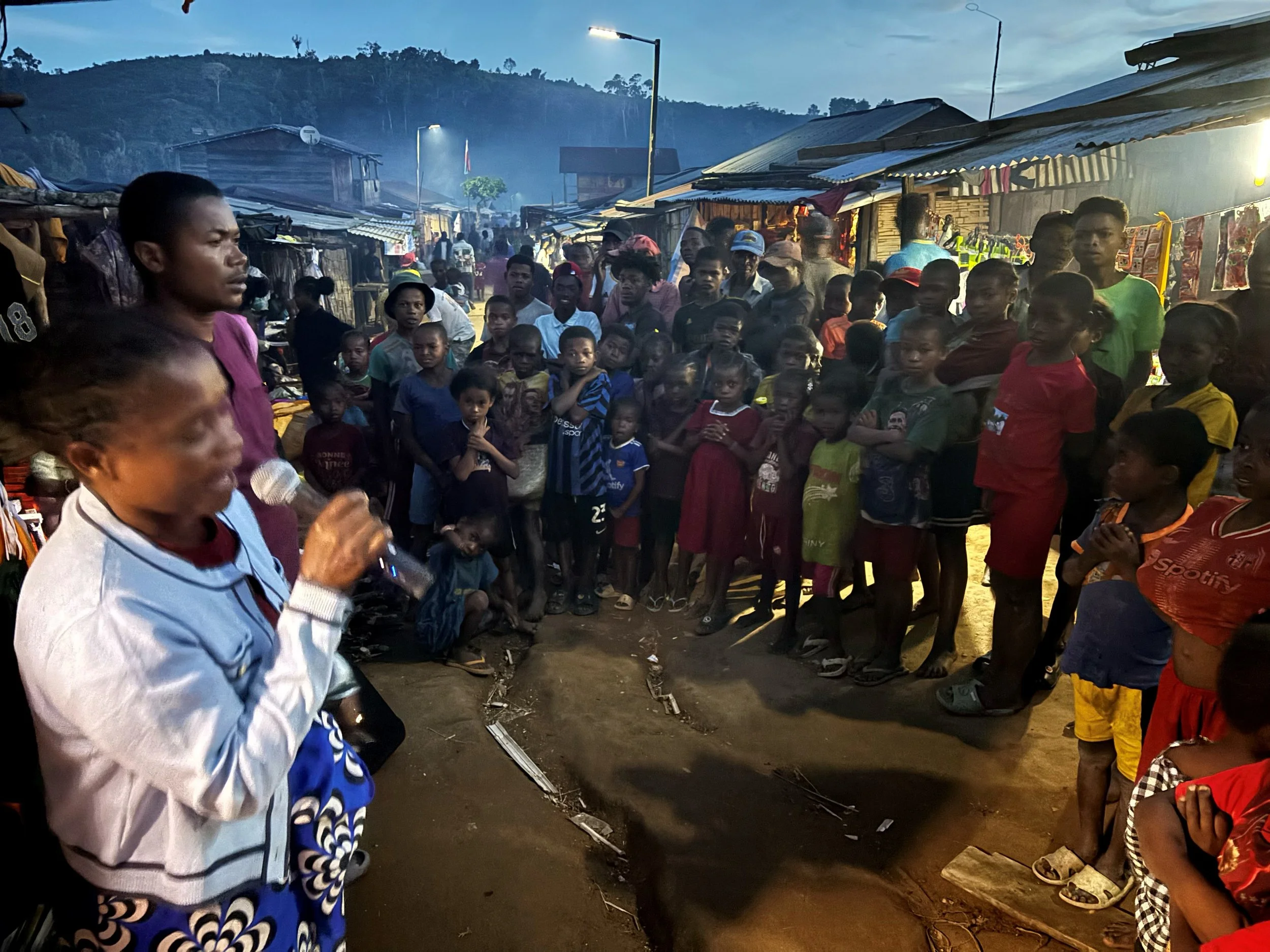
Preaching in the evening
The second village - Ampôfoko - was a new one for Helimission and proved quite hard to find. None of us had ever been there before and the pilot had no GPS coordinates - only a mark on a map that turned out to be wrong. We circled around a bit but he pointed out that he couldn’t do so indefinitely. Eventually Berton suggested just landing in a village to ask directions. We did this and were told that it was ‘over the ridge’.
On the other side of a few ridges we found a village which Berton thought must be Ampôfoko but there was no sign of a welcoming committee, no smoke from a specially lit fire not even an improvised wind sock! But there was a reasonably flat football field so we landed there, only to be told that the bit of the village we were going to was a half hour walk away! It was a linear village - stretching a long, long way, right up and into the rain forest.
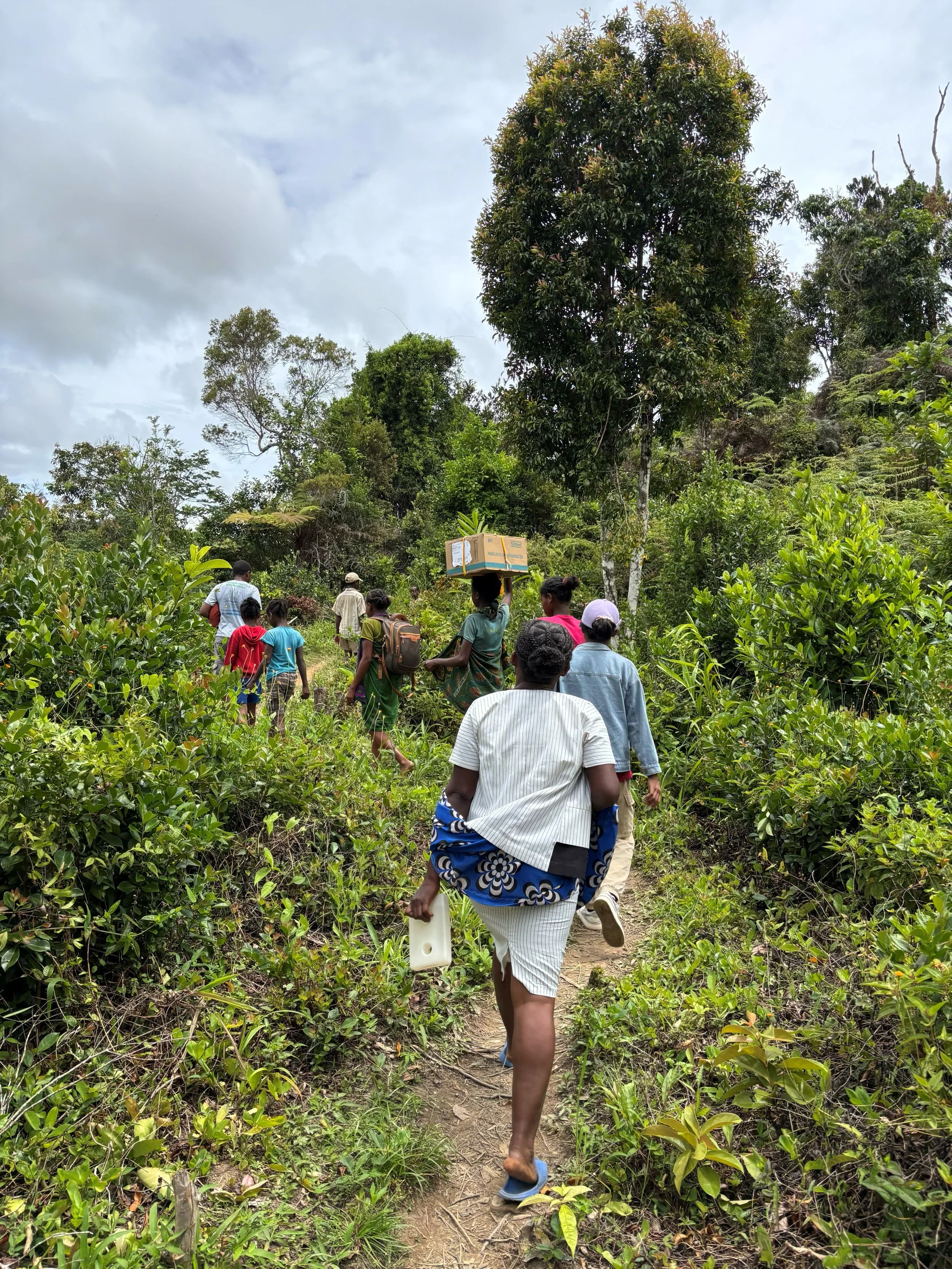
On our way to the village
We were staying at the rain forest end where there was plenty of cut and cleared ground, burned stumps of what must have been 50 or 60 metre trees, pointing sadly upwards like jagged broken fangs, huge swathes of hillsides newly treeless but planted with manioc, peanuts, corn and cloves.
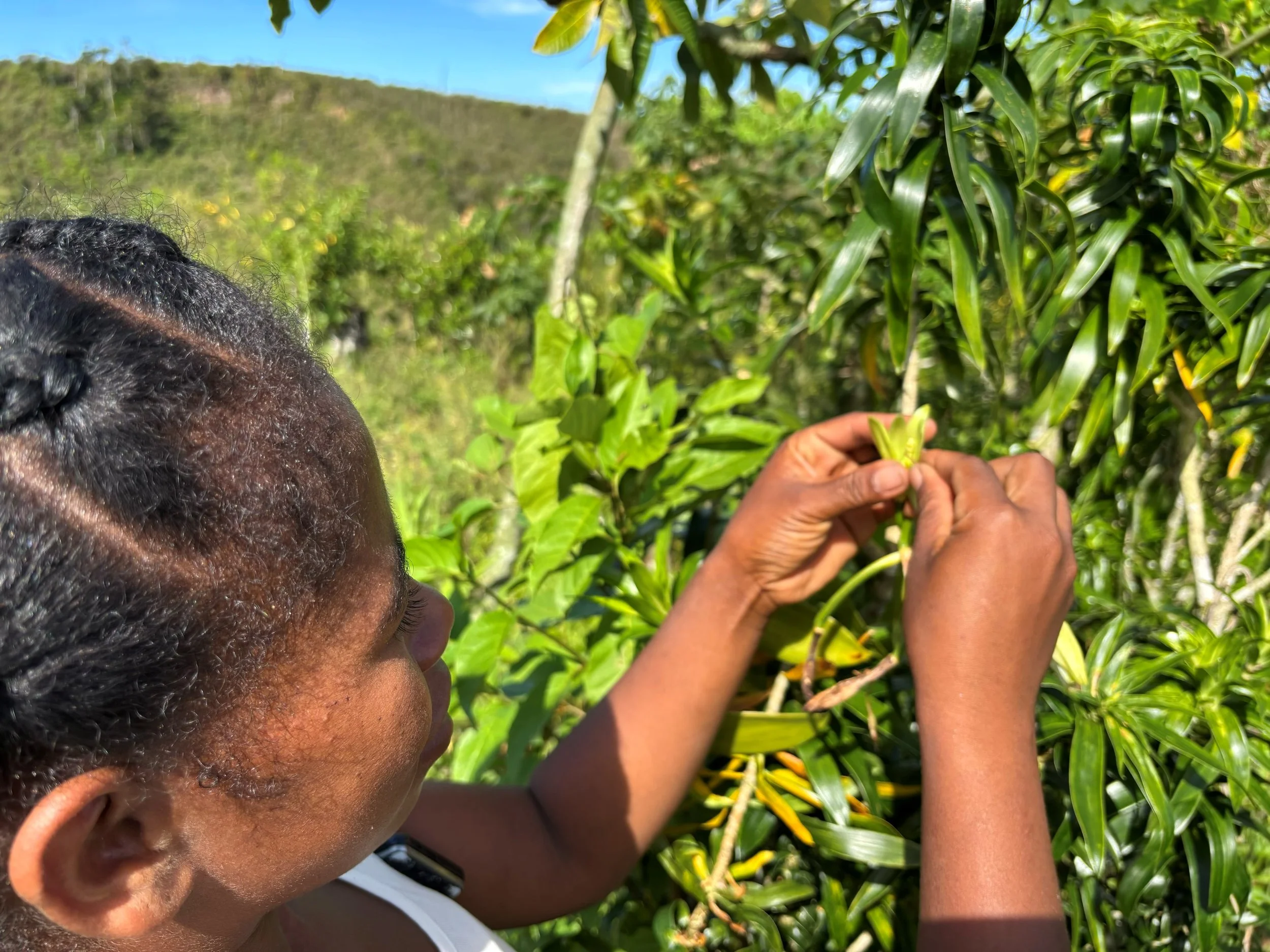
Fertilising vanilla by hand
I did wonder how long those remaining stretches of forest will have left. And what will happen to the abundant flora and fauna (including baby tenrecs I suppose). I do find this quite difficult. But the people are simply so poor and have so few options to provide for themselves; I suspect in their shoes I would do the same.
The welcome in the second village was very warm. A big crowd gathered to hear our introductions and explanations. Afterwards they wanted a group photograph, including me. It turned out later than I was the first white person to visit the village and they wanted a record.
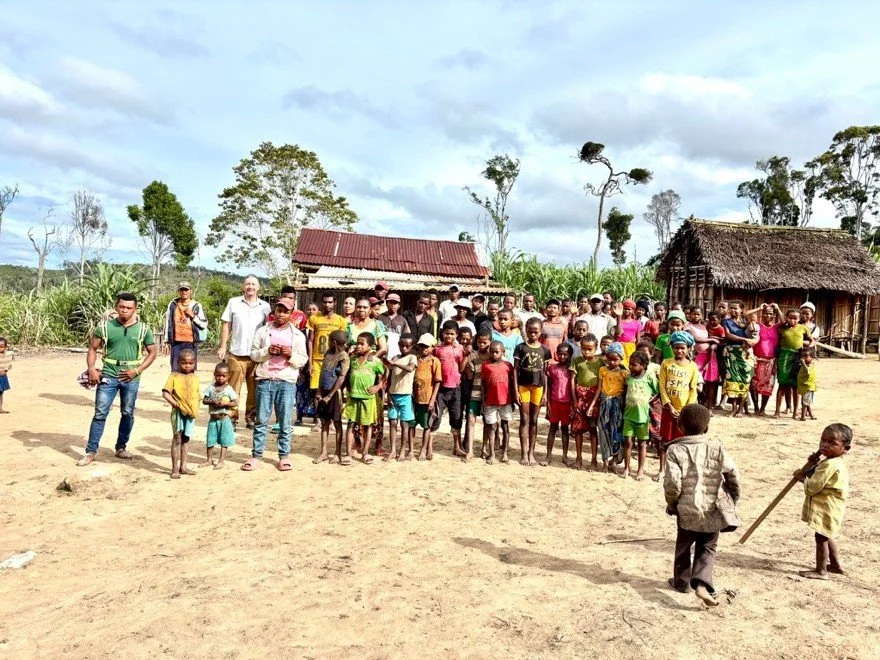
The team and villagers
A smaller subset of this group met with us several times - it included leaders and members from churches in nearby villages who had walked over. Berton had asked me to take on the teaching, so I presented the latest version of my series on ‘mercy’ in Luke’s Gospel (1:78-79, 17: 11-19, 18:9-14, 35-43).
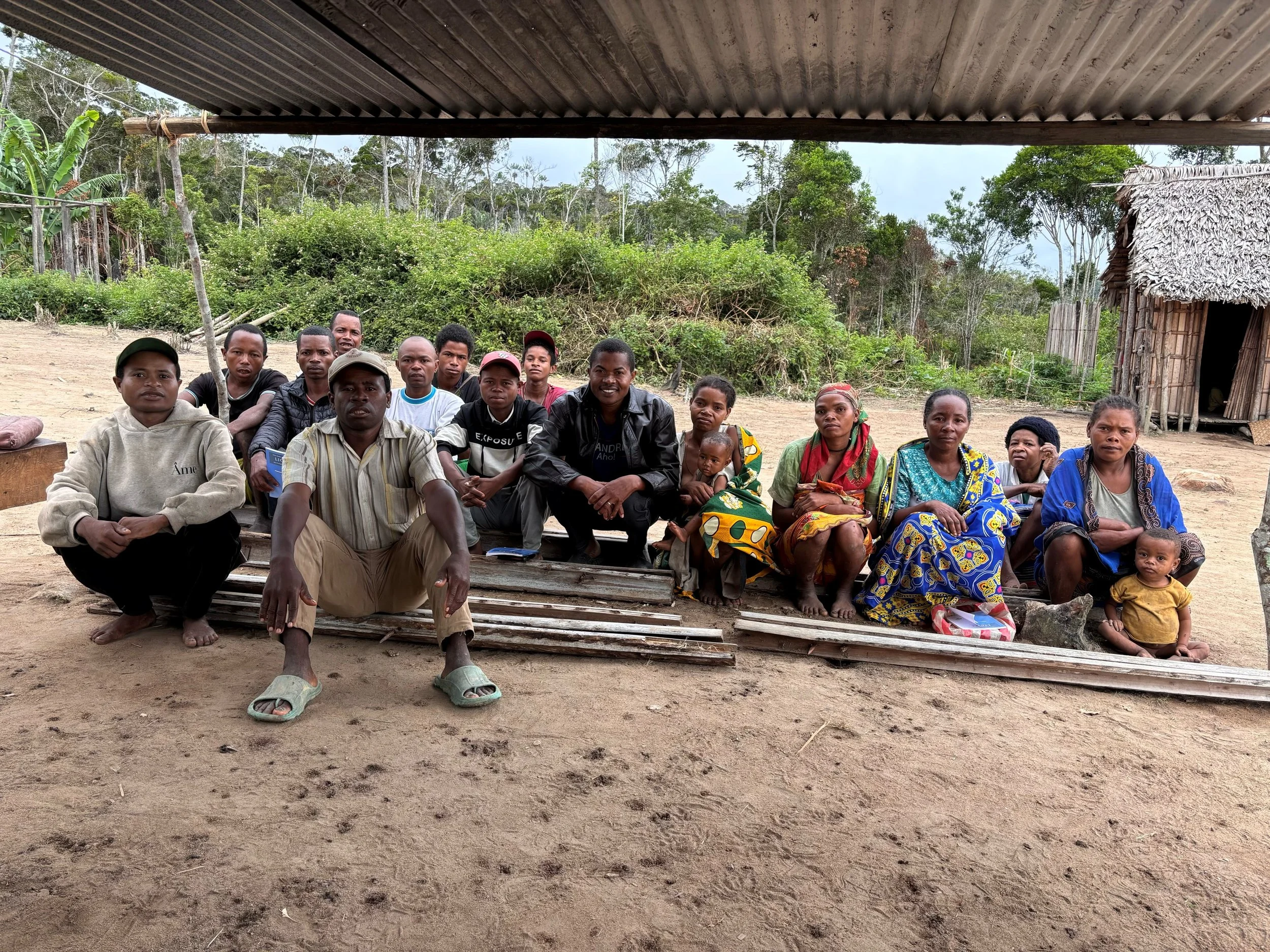
A group hungry for Bible teaching
I had worked quite hard to improve it before coming and was feeling a bit more confident as the first session got underway, only to find that I had left my notes for that one at home! Fortunately, it was a pretty simple message and I did have notes for the concluding illustration from ‘God’s grace is enough’ sermon from last week which I adapted to ‘God’s mercy is enough’.
When it came to the second talk I began to think that actually it may have worked rather better without notes. I had the perennial problem of holding a microphone in one hand and a Bible and notes in the other. Which does not work, for anyone who is not an octopus! Especially when you are outdoors with a wind blowing. That talk was less flowing and Berton had to help me out more.
For the third talk, the wind had abated and it felt better. I do marvel at Berton’s patience and humility in asking me to speak so much. It must be as evident to him as it is to everyone that he would be more effective than I can be. Yet he keeps asking.
It was all pretty simple stuff but apparently that is fine in these remote villages at their present stage of development. And, again, the paramedics were busy all day.
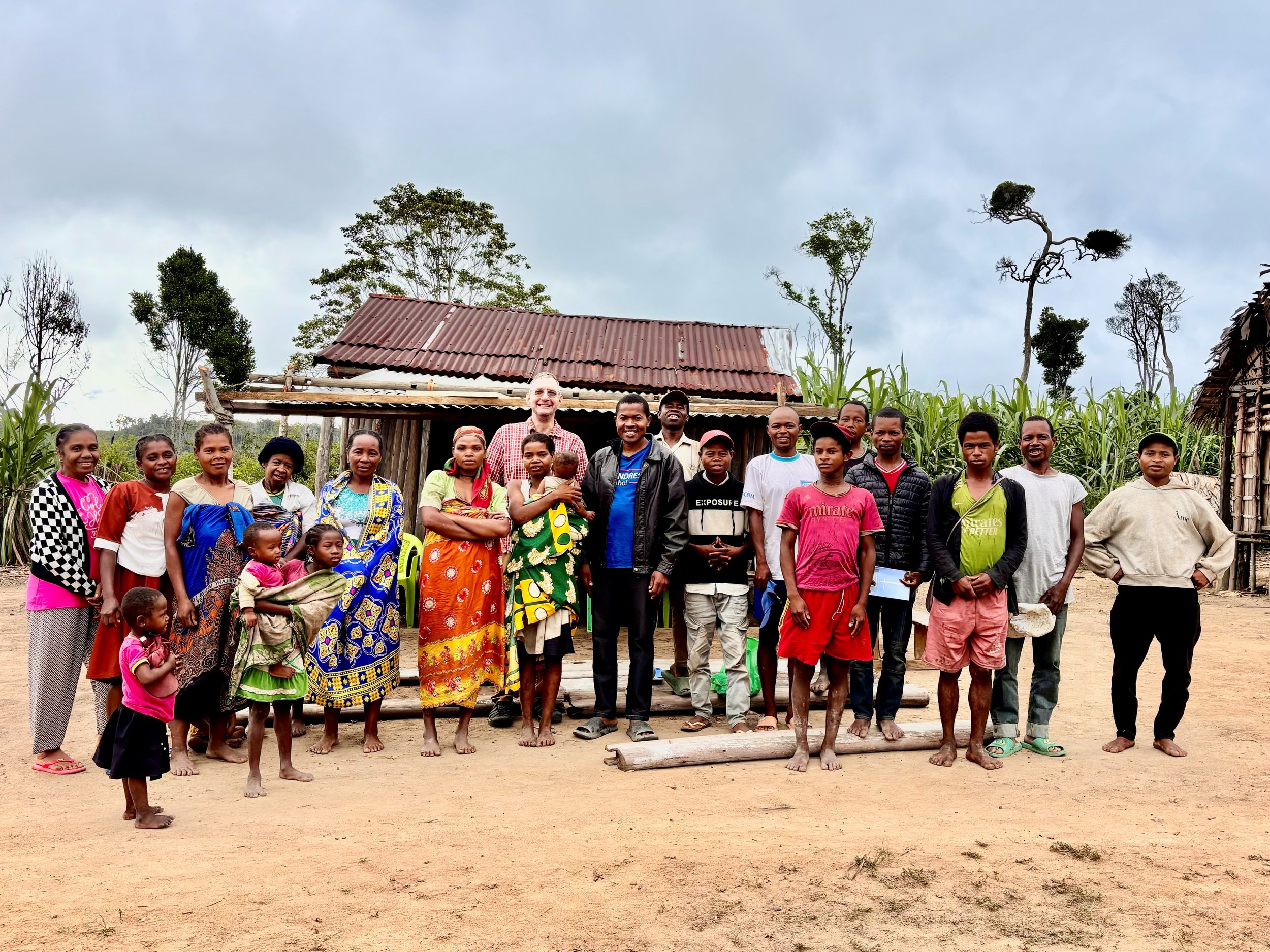
Christians from the village
As well as the formal teaching there was plenty of informal supportive chat, as well as some splendid youth and children’s sessions by Lucien.
As we left there was the customary touching farewell event where lovely speeches were made and little honoraria presented to us in homemade envelopes. It turned out to be about £1.80 each and set me wondering how much they sacrificed to give even this to five of us.
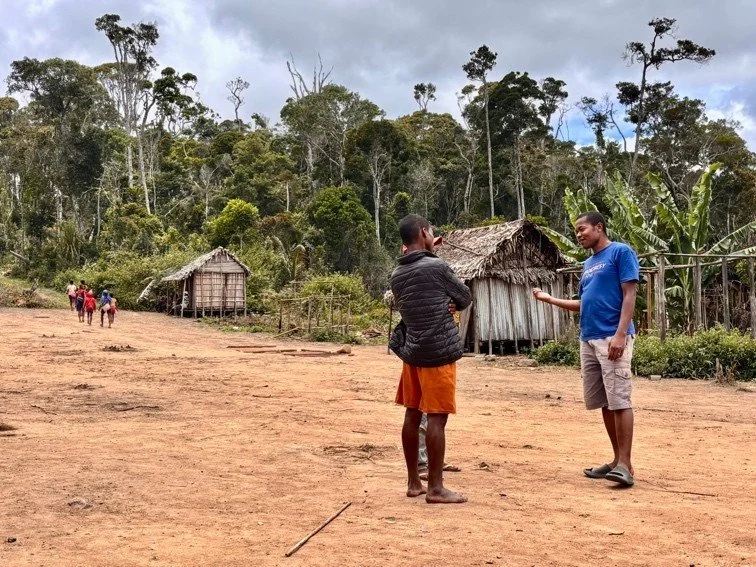
Berton and a village church leader
We then had a planning session. As directed by the Regional Board, Berton and I will focus on this region for the first few months of the year (with other leaders focussing on the other sectors). So he asked the leaders which villages should receive the next visit. The leaders conferred and came up with an idea which was accepted.
We had a lovely time and I feel very glad that Berton and I will be returning repeatedly to that group of churches in the first part of the year - and that other teams, or individual leaders will be similarly deployed right across the region.
Let’s pray for visits by all the teams of senior leaders to the nine different sectors - not only by helicopter but by motorbike, 4x4, and on foot.
Pray for the churches - many small, many vulnerable, needing nurture and protection - but precious to Christ.
Pray that they will resist false teaching and discouragement, stand fast and grow mature in Christ.
Pray for the cardinal need: godly, mature, humble leaders who live by the Bible and who teach the Bible.