
By Friends of Mandritsara Trust
Be still and know that I am God; I will be exalted among the nations, I will be exalted through all the earth. Psalm 46:10
Bako Rajaona is one of the longest-serving workers in the Mandritsara Good News Project. Recently she sent her news to us for the April 2026 Mandritsara Prayer Day in London.
Bako’s story
Bako wrote as follows: I am grateful for having had 23 years of following Jesus in Mandritsara, the longest part of which has been teaching Malagasy to missionaries from various countries at the hospital. (Initially she worked as a teacher in the Good News School, and then as a Laboratory Technician in the hospital laboratory.)
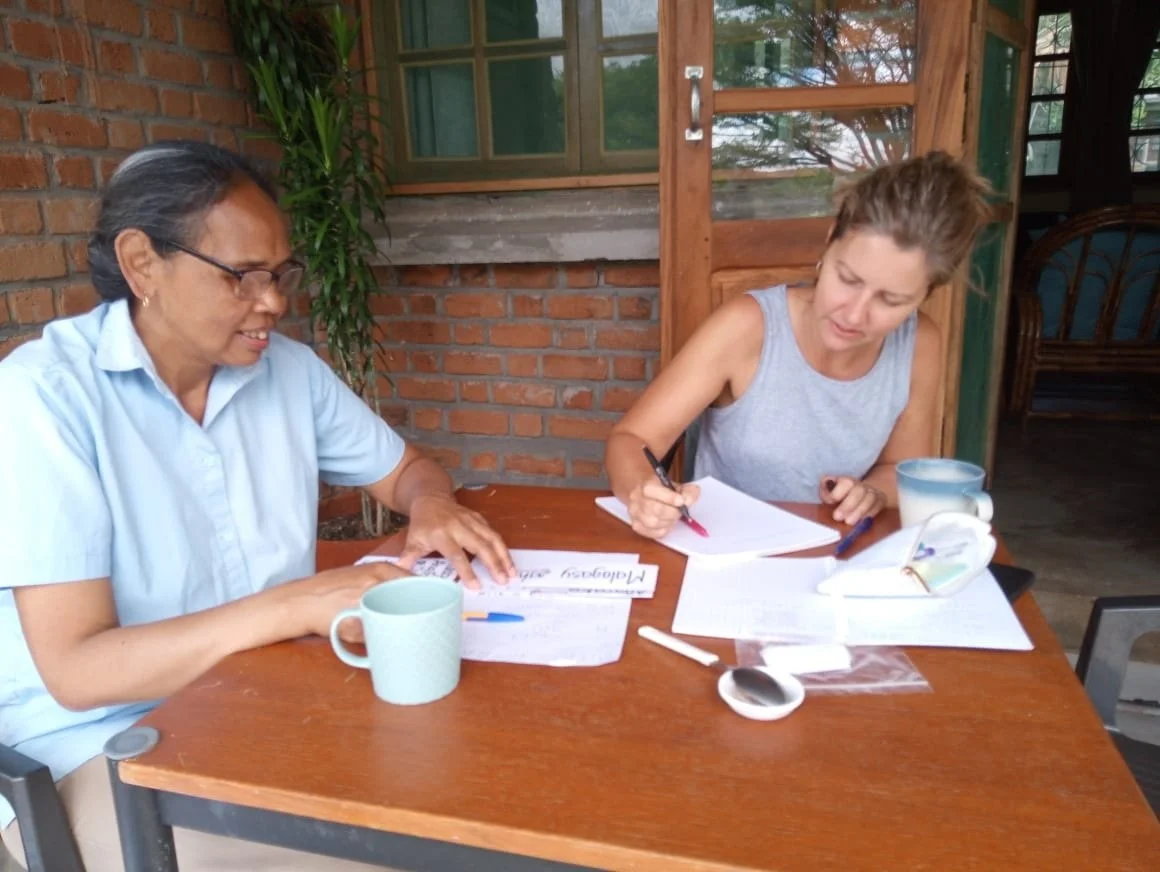
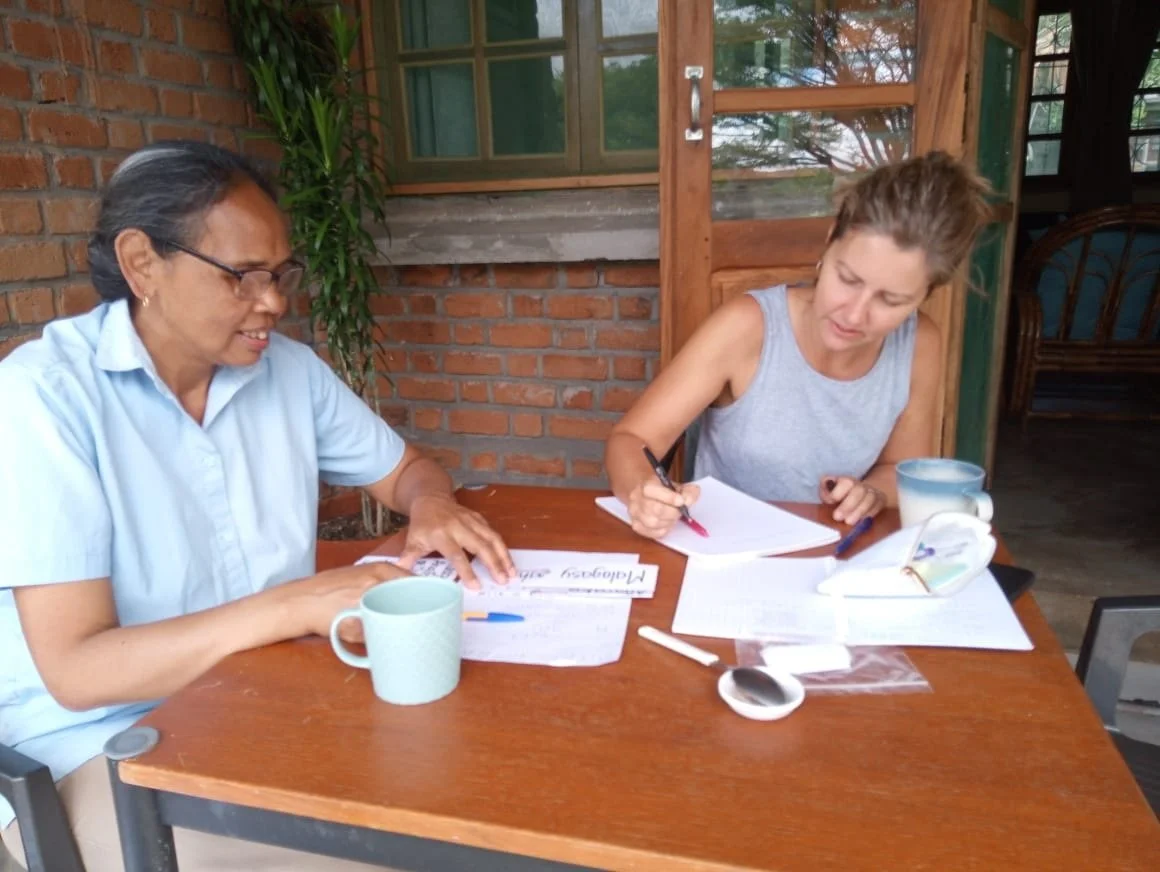
Bako teaching Malagasy
Why did I become a language teacher when I have no formal training in teaching? In 2008, when I was planning to return permanently to Antananarivo, I was asked if I could teach Malagasy to the missionaries. This would allow me to continue working with the Children’s Club at the church and around Mandritsara. I replied: I am Malagasy, I speak Malagasy, but I don’t know how to teach, even if it’s teaching Malagasy. But the reply came: if you can convince the new missionaries to see how much they need to learn Malagasy, you will succeed!
So, for the past 18 years, I have continued to stress to the missionaries, without being too strict, that knowing the Malagasy language and culture is vital for fitting in here. I have told them that our language isn’t difficult, and that you must listen even if you don’t understand at first, and you will learn word by word and phrase by phrase.
I am also grateful because I receive so much from them: learning their language, their culture, friendship, and fellowship, because for me, our lesson is an exchange. Once they have got a grounding, most of them continue with me to strengthen their language and cultural skills.
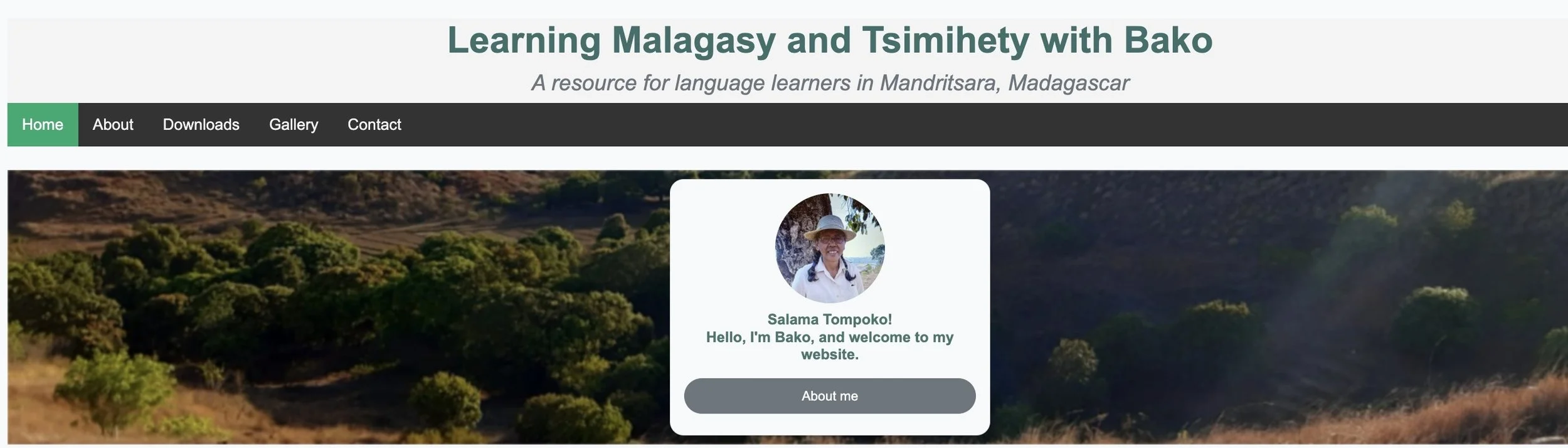
Bako’s Website
With the kind help of Dr Joel Chin, I have been able to set up a website with written lessons and also audio files for pronunciation. It is called “Learning Malagasy and Tsimihety with Bako” and can be found online at www.bako.blog. This means that missionaries can have ready access to lessons when they first arrive, or even before they come. I greatly appreciate Joel’s work and help.
Bako’s website
Joel and Joyce Chin and their 3 children spent a year in Mandritsara in 2022 working as doctors. We asked Joel to tell us something about Bako’s website:
How did the website come about?
The idea formed during our year in Mandritsara. We initially had a different teacher, but after Bako took over, I saw she had a very special gift for teaching. Her scientific background, university education, and mastery of both Official Malagasy and Tsimihety uniquely suited her to teach foreigners. It was clear that God had placed her in that role.
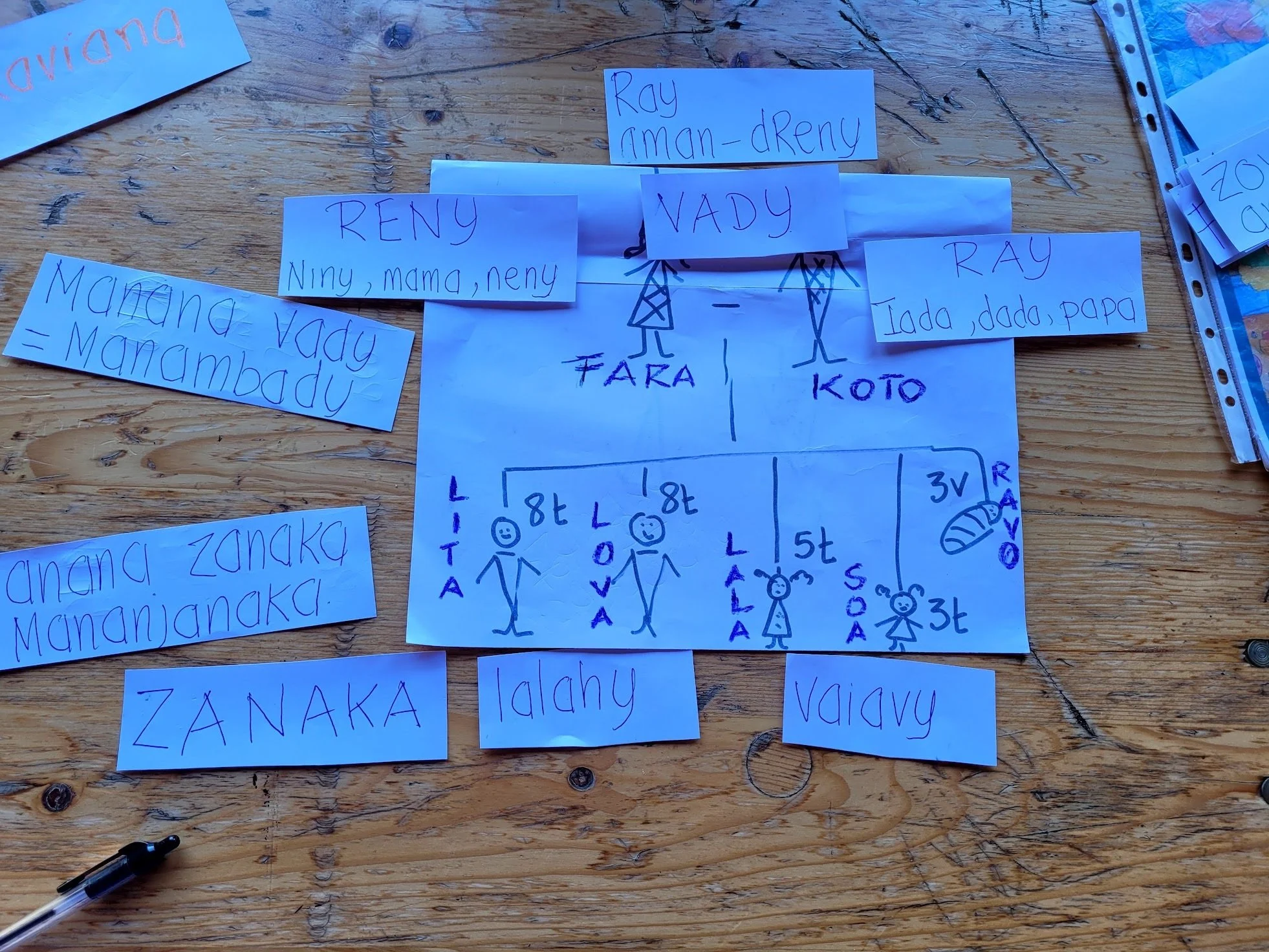
Bako's teaching method
Bako's teaching method
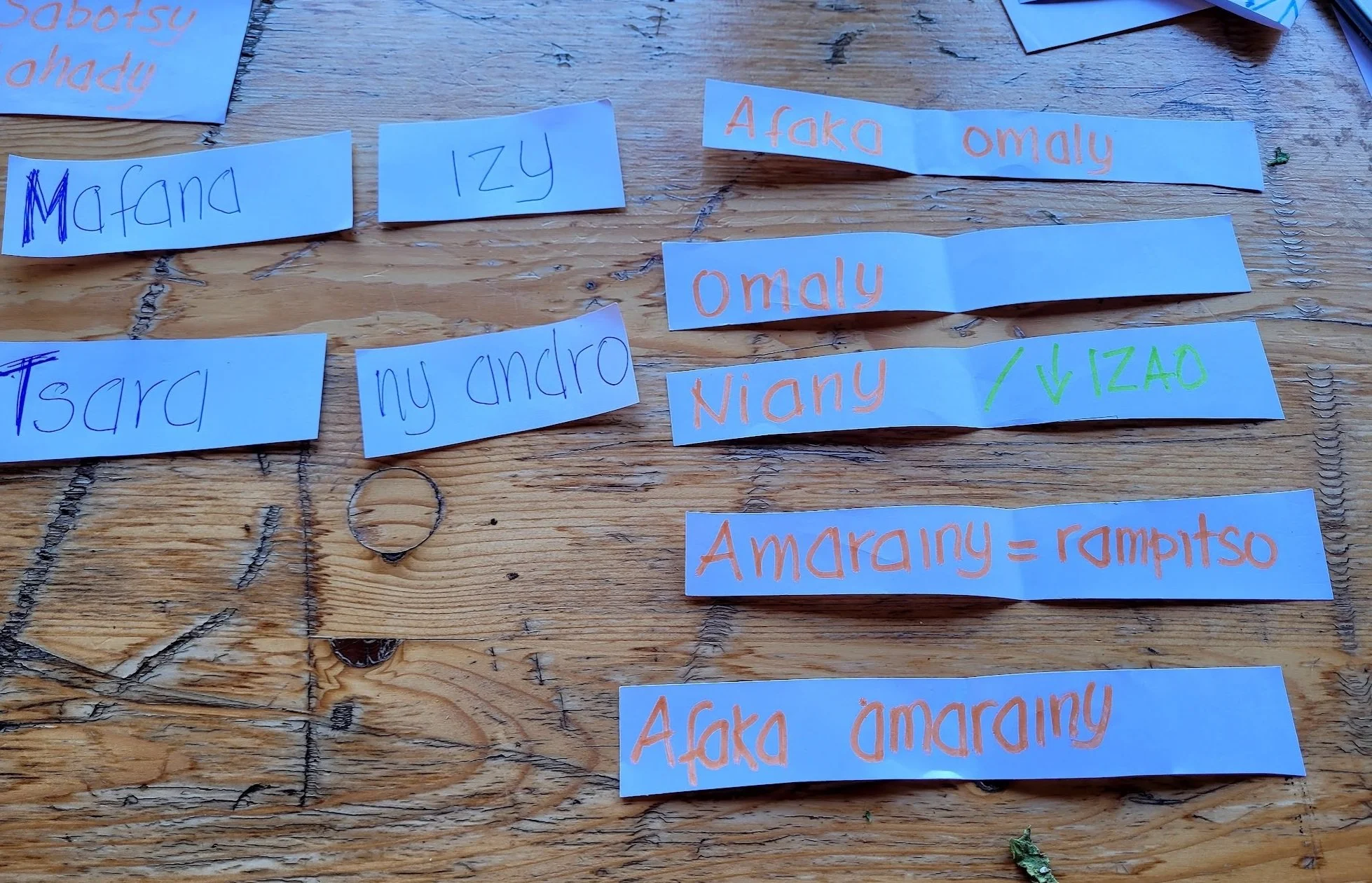
During each lesson, I could see her explain the language systematically and methodically. She would teach grammar using scraps of paper, mixing and matching phrases and vocabulary constantly. I understood her method from the start, and wished that she had better tools to deliver her teaching. Initially, I wanted to fix a simple problem: digitise her work so she wouldn’t have to repeat the process for every new visitor and codify her teaching method.
I could see many benefits - if this was on a website, people could acquire some of the language before arriving; if it is used alongside her in-person teaching, learning could be accelerated; and most of all, it meant her years of experience and wisdom could be kept for posterity. Over time, I realised this work was not only about the language, but ultimately a story of her life and life’s work that needed to be preserved and told.
What were the challenges in setting it up and running it?
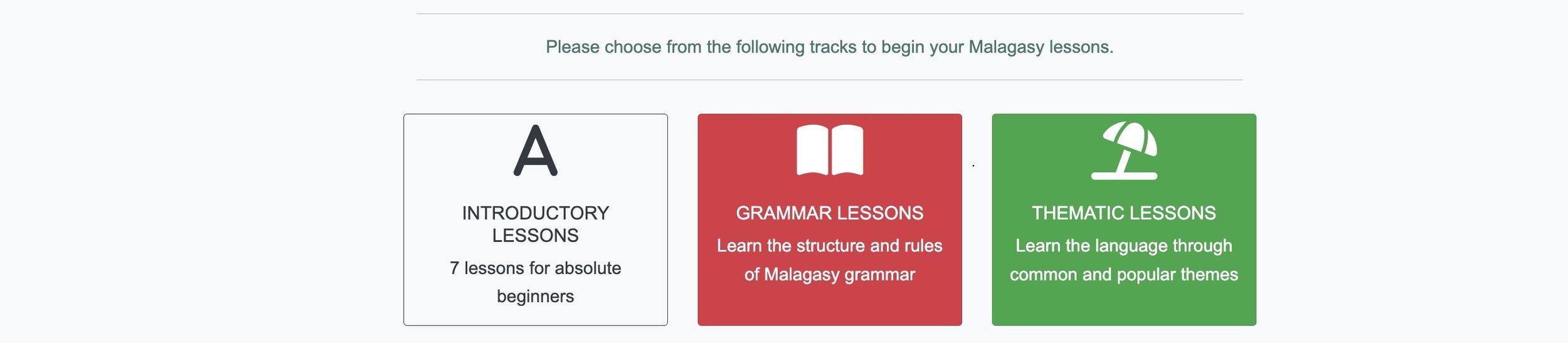
I pitched the idea to her in mid to late 2022, and we started working on a few introductory lessons. I remember Bako’s eyes lit up immediately when I first suggested it. She was brimming with ideas. We started with a set of introductory lessons, then she suggested adding different tracks - grammar and thematic lessons. She confessed to being a grammarphile, but realised that her students preferred learning through themes. So, having both tracks was the best combination.
Lesson Choices
The process required many back-and-forth exchanges: she would write a lesson in French, I would translate it into English, send it back to her for correction, and she would then record her voice for pronunciations of Malagasy/Tsimihety words. I was very keen that the audio files be included, so I left her a USB microphone before leaving Mandritsara. Since then, we have been repeating the same process, but over WhatsApp.
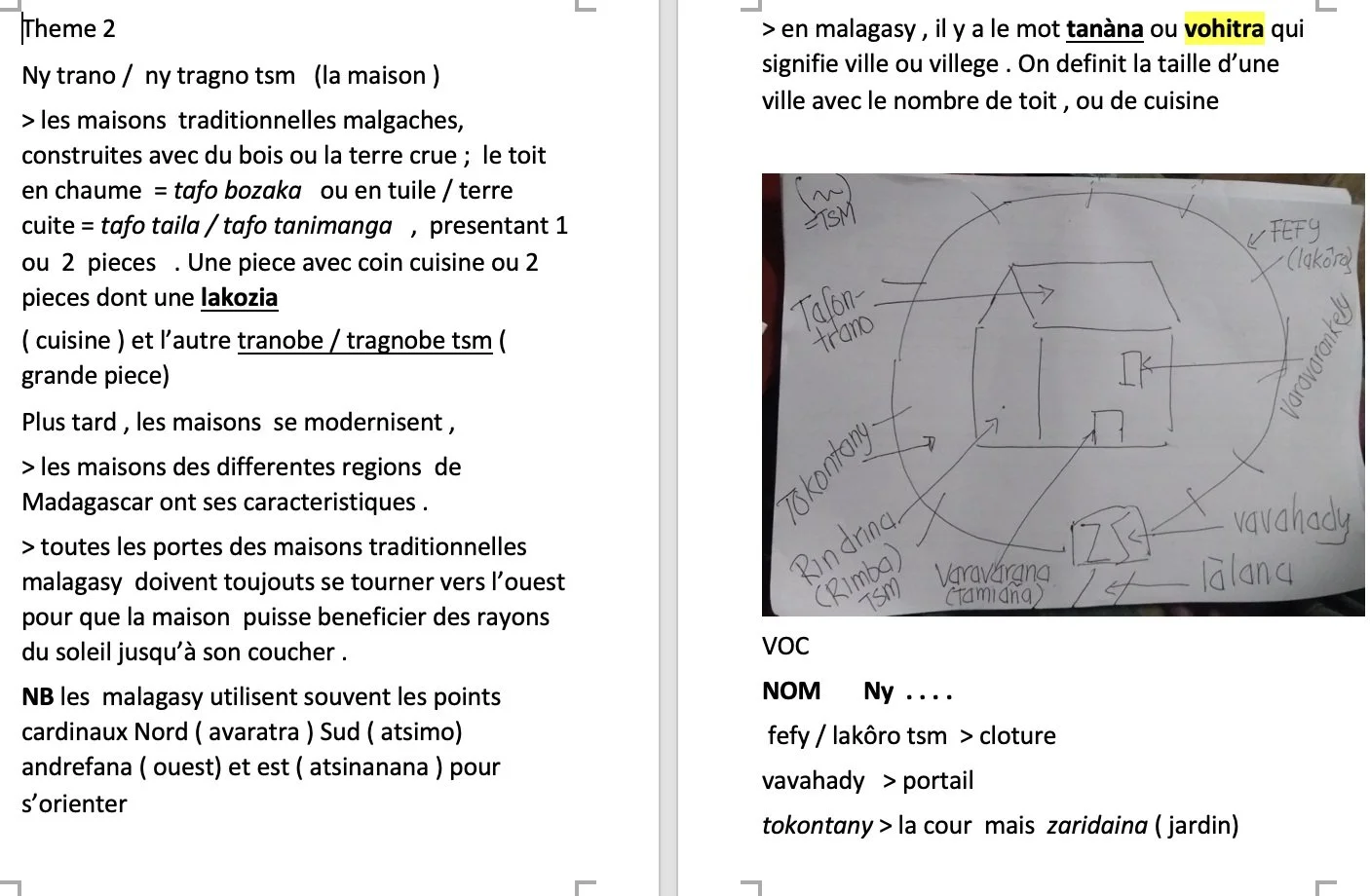
The other major challenge was my lack of experience in programming or website building. So I started with making 2-3 page lessons in PDFs, and uploaded them onto a website simply as a repository. I initially tried learning HTML and basic web design, but my efforts were quite rudimentary. It wasn’t until 2024 that the project began to resemble a proper website. The real turning point, however, has been the emergence of ChatGPT and AI since 2022. These tools have enabled me to translate her drafts more efficiently, generate structured HTML pages instead of static PDFs, and create a much more polished and user-friendly site.
That being said, the process remains labour-intensive. It still involves multiple rounds of revision, recording and editing audio files, embedding content, and uploading materials. This is particularly true for Bako, who continues to review my drafts despite periods of poor eyesight, while also navigating the challenges of working with software and constantly zooming in and out of screens.
Bako's website - webpage initial draft
Is it still being added to?
Yes. The introductory module was completed a while back, and we are continuing to build up on the grammar and thematic tracks – until Bako runs out of ideas! The limiting factor is me, as there is a backlog of 8-10 lessons in draft that I have not processed yet. The latest plan is for her to produce more audio recordings, something like a podcast, so the audience can acquire more practice with listening.
Do you have any examples of folk using it?
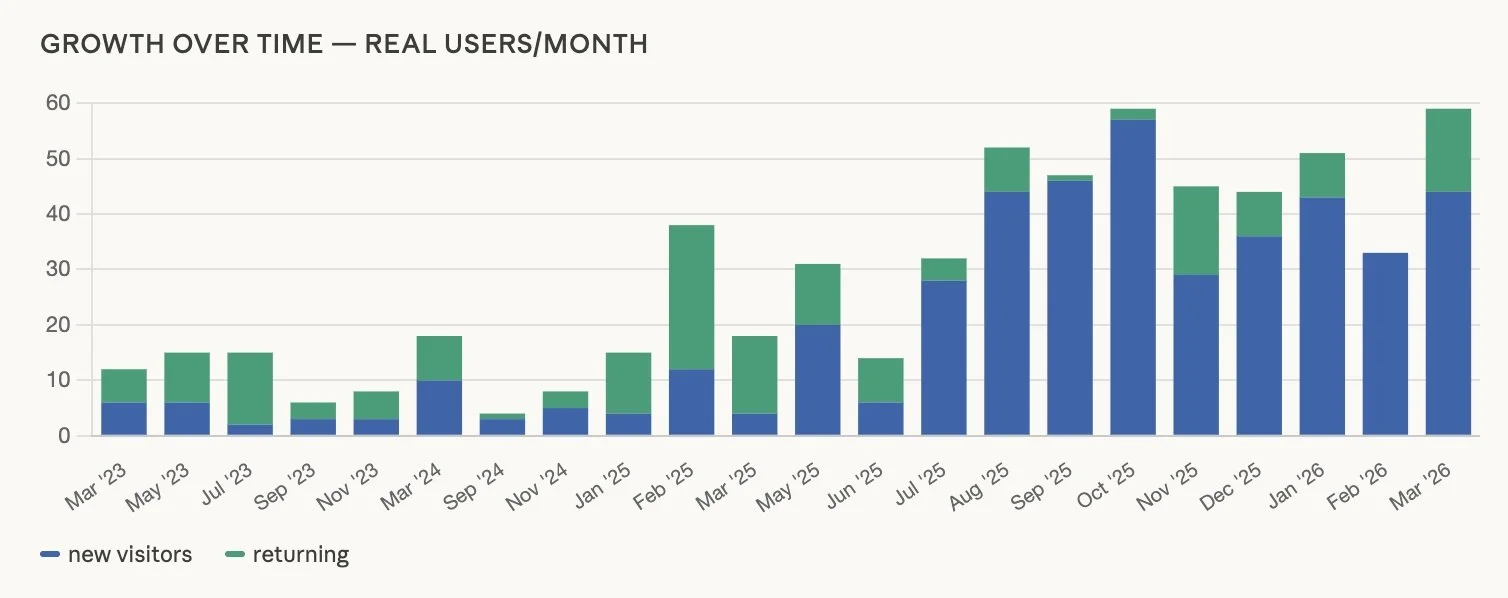
The website tracker shows:
100 people have meaningfully visited — spent real time, read something, or took an action
50 had a genuinely substantive visit — multiple pages, minutes of engagement, downloads
15 are or were active learners — returning visitors, multiple lesson pages, long engagement times
Overall there have been 228 file downloads all-time from 49 users.
Use of Bako's website
Do you have any other reflections on it and on language learning?
Beyond language learning, this project is about telling Bako’s story. It captures something of her identity, her faith and her ministry. I was very deliberate in making the website remain truly hers – her voice, not mine. The design, structure and emphasis of her lesson plans were preserved as much as possible, even down to elements such as her handwritten diagrams. The sections about her story and her photos were particularly striking for me. In many ways, my role has simply been that of a conduit—someone with access to tools, helping to make her voice more accessible to others.
Language learning goes far beyond vocabulary and grammar. Language carries perspective and it reflects culture. In the narrative sections of the lessons, one begins to see Malagasy and Tsimihety culture through Bako’s eyes—her reflections on the social weight of not being married or not having children, or the strong cultural emphasis on family and respect for elders.
Finally, this project has deepened my appreciation for the philosophy of language learning itself. There are many approaches, but Bako held a clear and thoughtful view: that official Malagasy should be learned alongside Tsimihety. For her, official Malagasy represents a shared national identity—a language that unites—while Tsimihety preserves local nuance and cultural richness. The two are not in competition but are complementary, and this principle is woven throughout her lesson plans. This resonated strongly with me. Growing up navigating three languages and multiple dialects in Malaysia, I have come to value both the preservation of lesser-known dialects and the importance of a common language that brings people together. In that sense, this project is not only about learning Malagasy—it is about understanding how language shapes identity, community, and belonging.
Please pray:
For Bako and Joel as they continue to work on the website
For the missionaries as they seek to learn the language and culture. Mastering the language facilitates their communication with local people, helps their cultural integration, and especially helps in their mission to share the Good News of Jesus.
For Bako’s eyesight. She only has vision in one eye, and has had several operations on that eye subsequent to a retinal detachment. Pray for ongoing treatment in Antananarivo and that she may be able to continue her work and ministry.
For Bako’s future. For her preparation for retirement, in God’s time, and that He may provide another language teacher when the time comes.
Postscript
When Bako read this story, she wrote: I am very touched. “We are unworthy servants; we have only done our duty” (Luke 17:10). It’s like a summary of my life and of my reason for being in Mandritsara. “For from Him and through Him and to Him are all things. To Him be the glory forever! Amen” (Romans 11:36).