
by Samuel and Pippa Frith
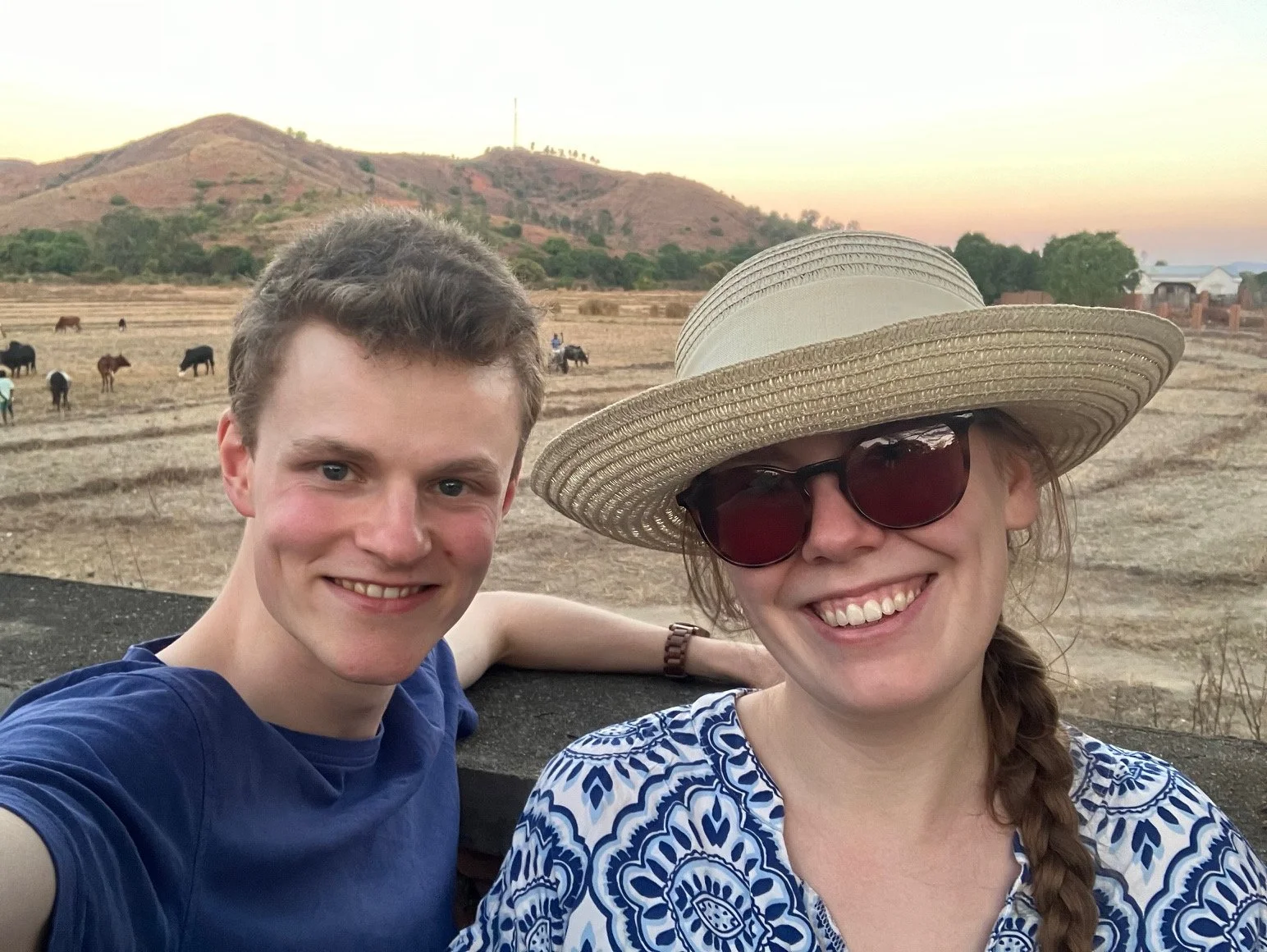
Pippa Frith is a final-year medical student in Cambridge. She has always been interested in medicine as a tool for gospel work. Back in 2022, one of her lecturers mentioned that a friend of his had worked at a Christian hospital in Madagascar, and since that chance conversation, Pippa considered doing her elective there, to get a taste of Christian medical mission. So she spent six weeks in July-August 2026 at the Good News Hospital, Mandritsara.
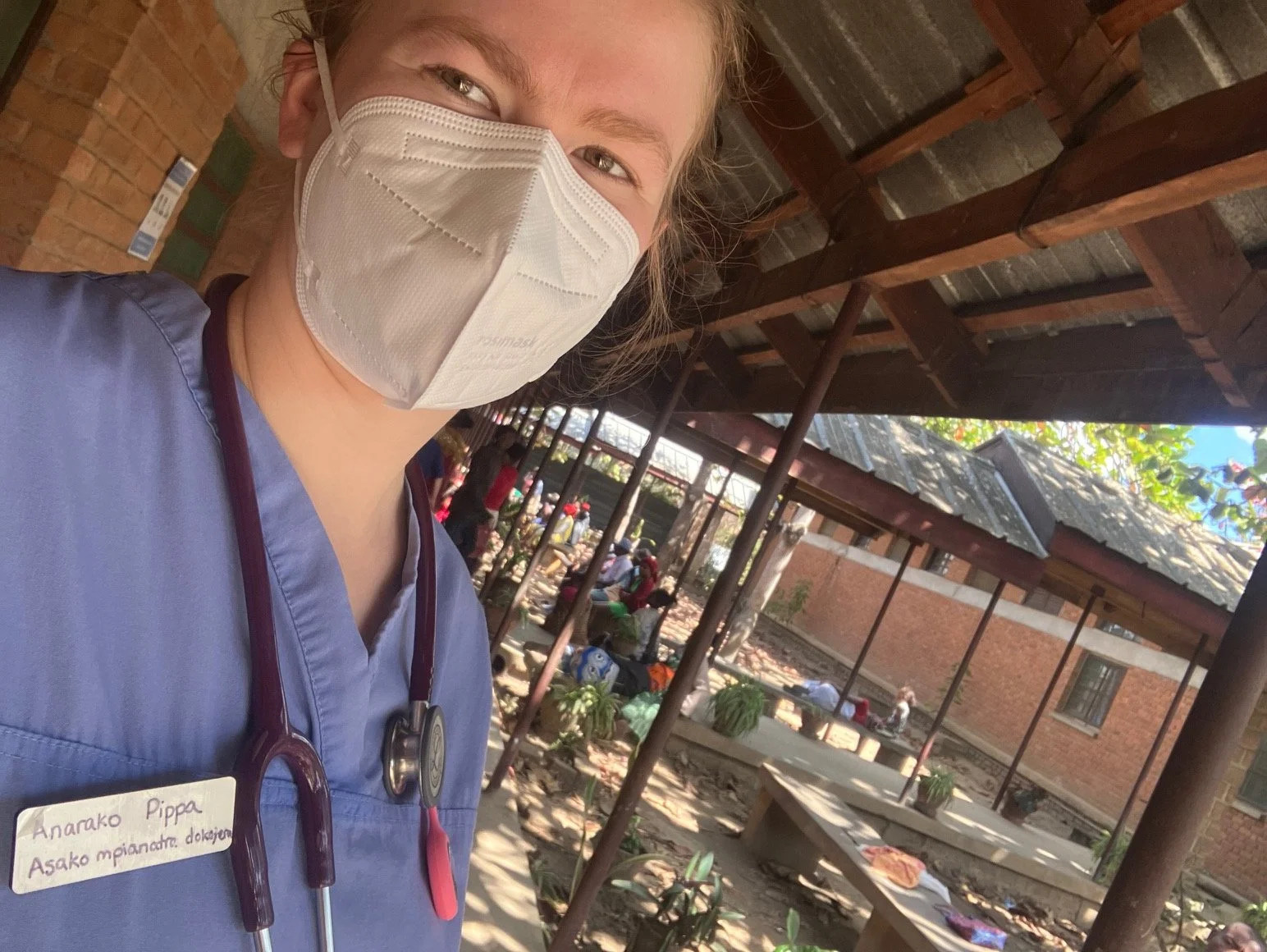
The badge says: “My name – Pippa, My job – student doctor”
Her husband Samuel is a research student of Biblical Hebrew. He hopes to work in the future in Bible translation.
Being a student meant that Samuel could accompany Pippa for the six weeks, spending most of the time writing his thesis, and also taking the opportunity to learn a bit about cross-cultural mission and the ongoing work of Bible translation in Madagascar. He will spend the next year training to become a maths teacher while Pippa completes her medical training.
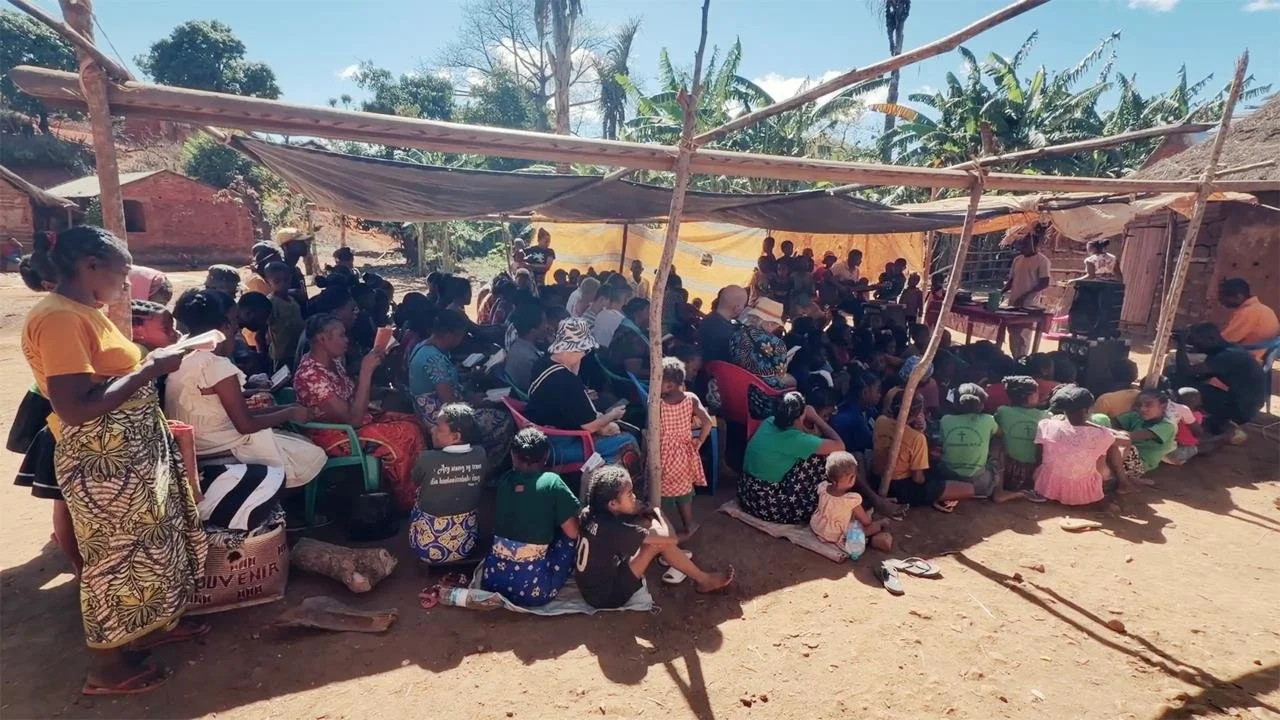
We would like to tell you of our recent weekend trip to a village, an hour or so’s drive from Mandritsara. This was our first stay in a remote village, and was a happy learning experience for us. The reason for the visit was to attend a Bible conference of the local group of Bible Baptist churches.
By 8am the hospital Land Cruiser, which seats nine people, was loaded up with folk from the churches in Mandritsara, Julian and Debbie Hardyman, and us two and we were on the “road”. Julian was driving. It was nice to be introduced to the others, some of whom have remarkable testimonies. Along the way we met several groups walking to the conference, and luggage and small children joined our company – with each of the adults in the back having a child on their knees. Debbie thought it was probably their first time in a car, and possibly their first time seeing a white person. Understandably, the children who joined us cried all the rest of the way there!
The journey was certainly an adventure – a bit like a theme park ride! There were boulders, narrow passes, hairpin bends and a ford, but Julian skilfully navigated them all. But despite his impressive 4x4 skills, it was a bumpy ride tosay the least. Some of the slopes took a couple of stalled attempts before we finally got over them. At one point I wondered who would win - cow with horns or Land Cruiser - when we approached an ox-cart right in our path.
Thankfully, we didn’t have to find out!
Along the way, there were beautiful views, and Julian pointed out some of the local animist culture. There was one village that Julian said was very hostile to the gospel as it had a strong witchcraft presence, but encouragingly there was a group of believers in that village despite the opposition. We saw a little building by the side of the road which had a cross, a stone slab as an altar for offerings and stack of omby (cow) skulls. Julian says this indicates a syncretistic religion of animism with a veneer of Christianity although it’s not always clear exactly which parts are false religion and which simply cultural.
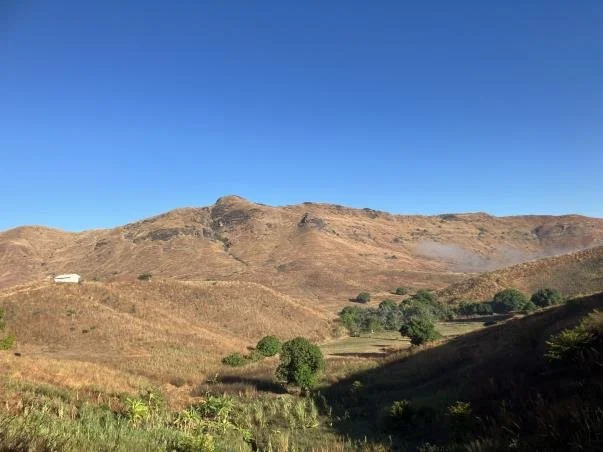
See how mountainous it is. Like a yellow Snowdonia. The small white building is a family tomb. We arrived in the village just as the conference was beginning with breakfast. These weekend conferences are held once a month during the dry season (roughly May to November), by the Bible Baptist Churches in each sector of the region. There are about 70 of these churches in the villages in the Mandritsara District, so they’re split into sectors. This one includes Mandritsara itself and villages around it, and is made up of about 10 villages.
Many of them only have a handful of members, so people are willing to walk a long way (up to 15km) to gather for these conferences to receive encouragement and teaching. At breakfast, everyone handed in the uncooked rice they’d brought, which was then cooked in cauldrons over smoky wood fires in the village square for each subsequent meal. As visitors, we were given the privilege (with no option of refusal) of sitting on plastic chairs instead of a rug on the floor. But as the conference went on, enough plastic chairs appeared for most adults to have one, so we felt less self-conscious. The meal was a dollop of rice, unlimited in size, and a sprinkling of greens.
While some people were still being served, a little boy was splashed by the hot liquid from the cauldron and burnt on his arm. Pippa poured some of our drinking water on, but far less than British guidelines would want. She felt the need to avoid behaving too conspicuously, as using a large amount of drinking water would be unthinkable to the villagers. The only time they ever drink water is at the end of meals, when the crust of rice burnt on to the cauldron gets soaked and boiled. The resulting water, despite its dodgy dark brown appearance, is safe to drink as it’s been boiled, and has a nice toasty or nutty flavour. But you need to be at the front of the rice-water queue after a meal, if you don’t want your boiled brown water to be diluted with clear but unboiled well water!
Debbie and Pippa asked the crowd of women what they would do to the burn on the boy’s arm, and they said apply cow dung. Thankfully, he ended up with a dressing from the Hardyman’s first aid kit instead!
After breakfast was the first teaching session of the conference. The theme was marriage, and we heard talks from village pastors on the passages you’d expect – Genesis 2, Ephesians 5, 1 Corinthians 7, and all the cross-references.
The message was simple – one wife per husband, one husband per wife, and divorce is not allowed. That was very much the message of the entire conference – all four teaching sessions that we attended. Repetition and repetition is the way they like to do things in Malagasy villages.
Then it was lunch – unlimited dollops of rice with a slosh of sauce. Then there was time for outreach to the village, using Oral Storytelling. Some of the folk had been on training courses for this in the south of Madagascar. The story of the night was ‘The rich man and Lazarus’ (Luke 16:19-31 – do take a minute to read it if you want to imagine the scene).
The adults at the conference got put into groups of about five, and then practised telling the story to each other.
Samuel was in a group with Julian, and Pippa was with Debbie. We didn’t have to speak, only listen, but Julian had a go at telling the story during the practice time. Luke’s gospel is the only part of the Bible that has been published so far in Tsimihety – the local dialect of the ethnic group in this region of Madagascar. The rest of the time, they use the official Malagasy translation. This goes back to the 1800’s and some of the language is quite archaic, besides not being the local people’s daily language. Publication of the Tsimihety Luke is something of a step forwards, but even so, rural people speak fairly divergent varieties of Tsimihety from one another. So even this new translation is trying to cover a huge and diverse geographical area.
With Oral Storytelling, the idea is to speak in an engaging way and include all the important points of the story, not to memorise the exact wording used in the Bible. Everyone in my group understood that this was their aim, but some were more successful than others. At any rate, we visited about four homes, and had a lukewarm-to-friendly reception each time. It was dusk, and each house had a group of women peeling vegetables, sieving rice and feeding babies, while the men were rounding up the cattle into pens for the night. They generally seemed to enjoy having some light entertainment courtesy of the church conference.
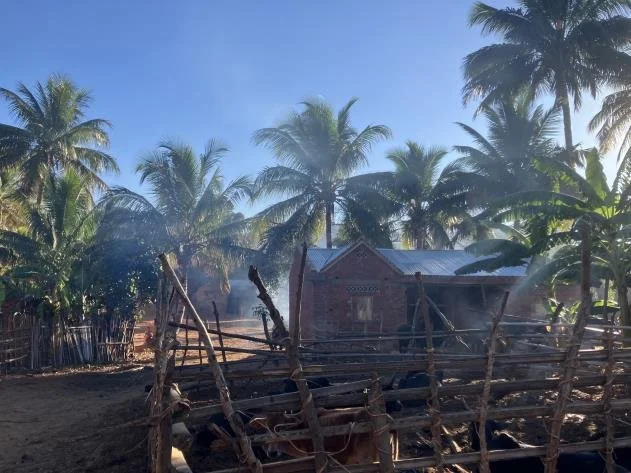
At each house, two of our group would have a go at telling the story. Occasionally the locals would ask a question, and then each time they agreed to pray together as a whole group. Julian was given the task of giving a gospel application – riches will not save us, the important thing is to be trusting in Christ. God has great compassion on the poor.
In one part of the village, there was extremely loud drumming going on – a constant drone coming from a closed-up house. Apparently, someone was in a trance, and a number of villagers were drumming as part of the ritual. Lots of these people were also drunk. We were told this is sadly a common state of affairs in the villages. Julian said the trance, unlike an epileptic seizure, involves a voice speaking other than the medium’s natural one. He has been told that half the mediums are just charlatans putting on an act, and the other half are willingly choosing to undergo a state of demon possession. Either way, people pay to have their fortunes told by the person having the trance.
So you could feel this extreme tension in the air between the church, which has been around for some time and doubled in size in recent years, and this hostile presence right on their doorstep. What must it feel like on the pitch- black nights to be a parent of young children in this village?
The other thing I noticed was a beautiful, strong double rainbow in the evening sky. Only I could see it – all the local folk were sitting with their back to it. When Julian noticed and pointed it out to one of the Malagasy ladies, she didn’t react with the kind of “Oh, how nice” that I might have expected, but with a sort of awkward nod and forced smile.
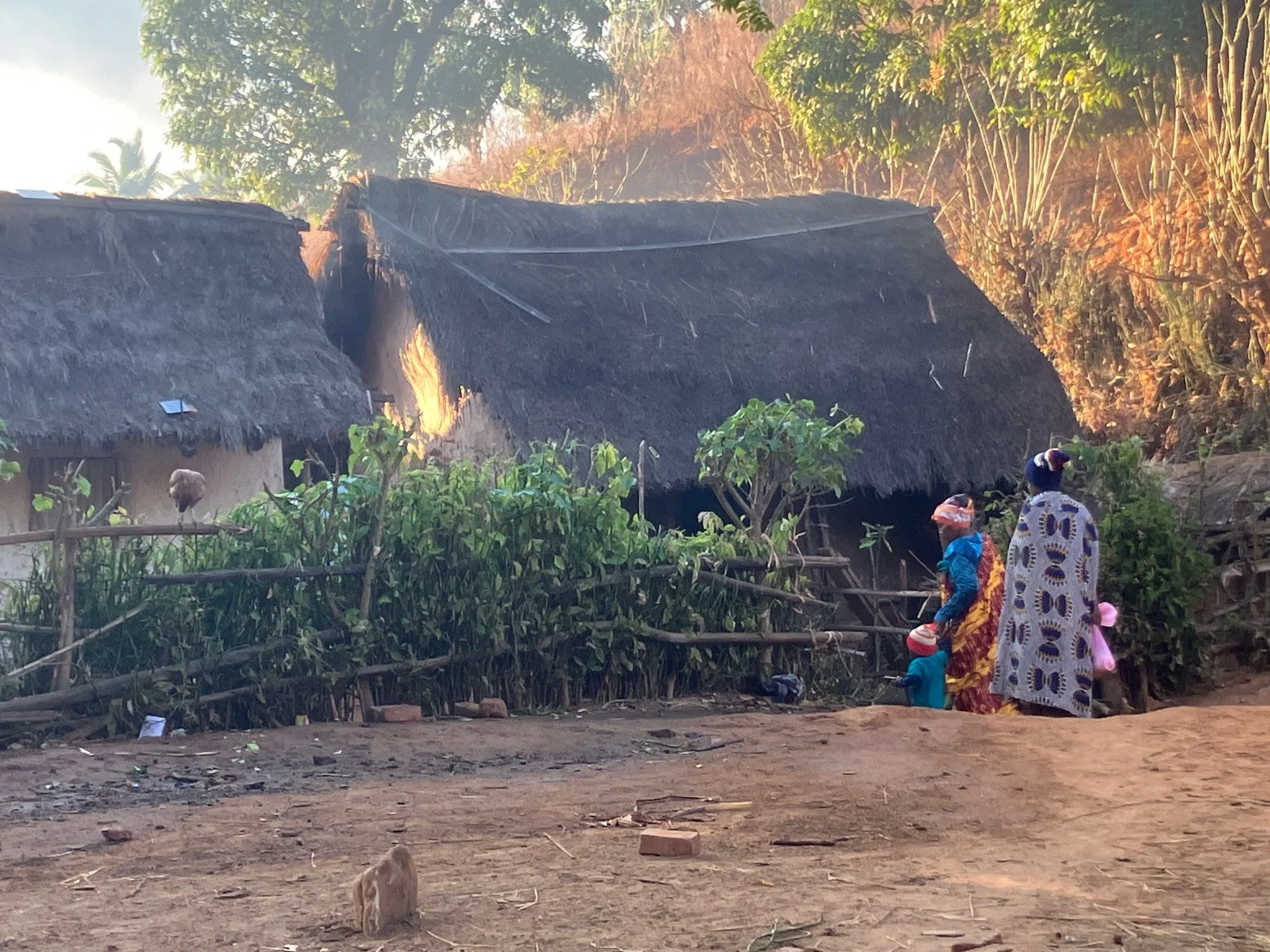
Julian explained to me that rainbows are feared in this part of Madagascar, and if people see one, some head indoors, and bring in their cattle from the fields, because they think if a cow drinks from water that has had the reflection of the rainbow, it will die. The Christians know the symbolism of rainbows in the Bible (a sign of God’s peace towards mankind in Genesis 9:12-17, and a sign of God’s glory in Ezekiel and Revelation), and they know that superstition is wrong, but some find it difficult to shake off the traditional attitudes.
To make matters worse, the Official Malagasy Bible uses an a word for rainbow that Tsimihety people don’t know, which means that lots of Christians don’t even know that rainbows are mentioned in the Bible, let alone are a good thing.
The rest of the conference was very much as before. Pippa’s group actually went inside the houses they knocked on, which were all completely full of smoke. She had to go to bed after that but thankfully neither of us suffered any illness, despite the smoke and the extremely unfamiliar environment.
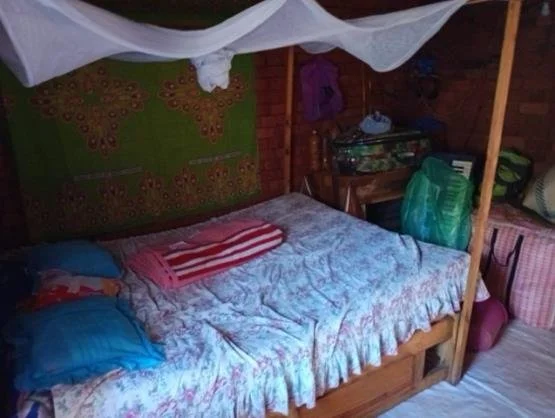
This is the room we stayed in. It was much nicer than we expected as it had a proper bed!
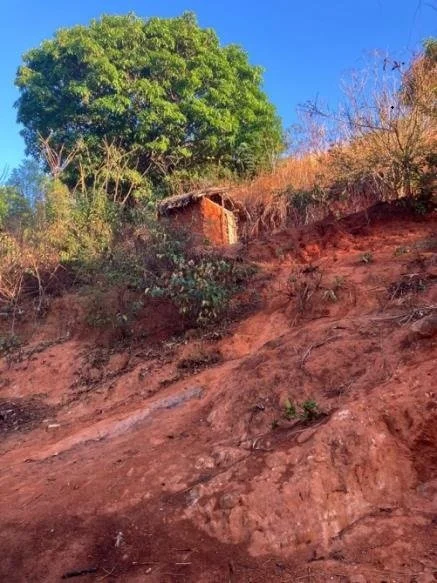
This was the perilous climb to our host’s toilet, with a hole in the ground and a hut for privacy. Sometimes there’s also a bucket of well water for washing, but most people prefer to wash in the river. There are separate washing places at the river for men and women and the women also wash their families’ clothes there.
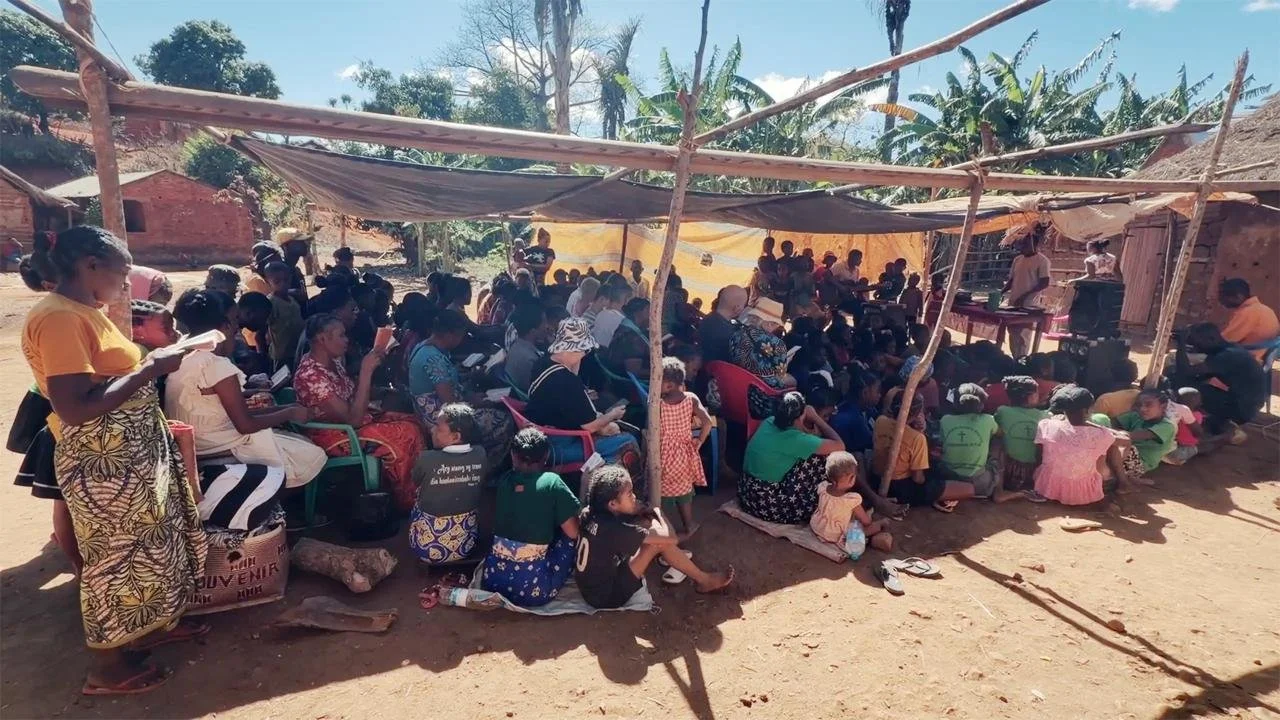
This year, the rains finished earlier so at this time of year there’s not much river and it will continue to dry up until the first rains in November or December. On Sunday, we had a church service in the village square, with a very long sermon following the theme of marriage and divorce. Even with the tarpaulin that was erected to give shade, we struggled in the heat.
Sunday lunch was a special affair, as we were invited to eat in the home of someone from the church, instead of in the village square with everyone else. We had some delicious slowly (and thoroughly) cooked meat with our rice, and followed the traditional system of sitting on the floor with a big bowl of rice in the middle. Each person has a spoon to eat rice from one side of the bowl with, and you use a serving spoon to put meat and sauce on your bit of the rice.
Five more people from the hospital made the trek over on Sunday morning, in a tuk-tuk – driver and three passengers on the inside, two on the outside. If you’ve ever seen this remarkable machine, or the road to the village, you’ll appreciate the awe and wonder that fuelled our debate on the way home – which is a greater marvel of technology, the tuktuk or the Land Cruiser? (You can’t carry a Land Cruiser on your head over a flooded river!)
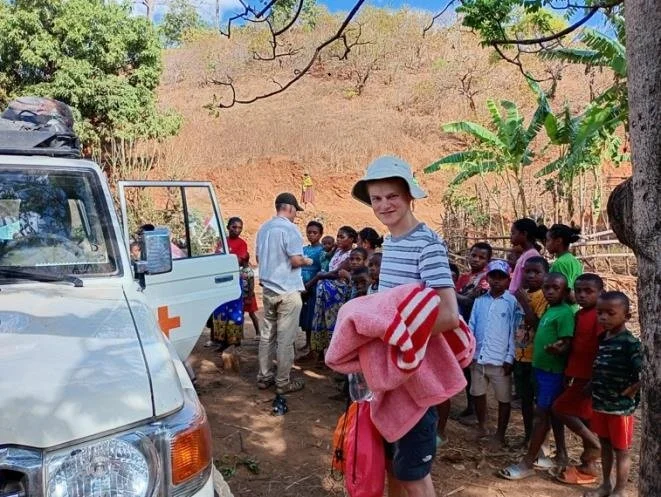
Here we are loading up the Land Cruiser to leave. I was worried all these children were expecting a lift from us, but fortunately they were just watching the spectacle of loading! It had been a weekend of adventure for us.
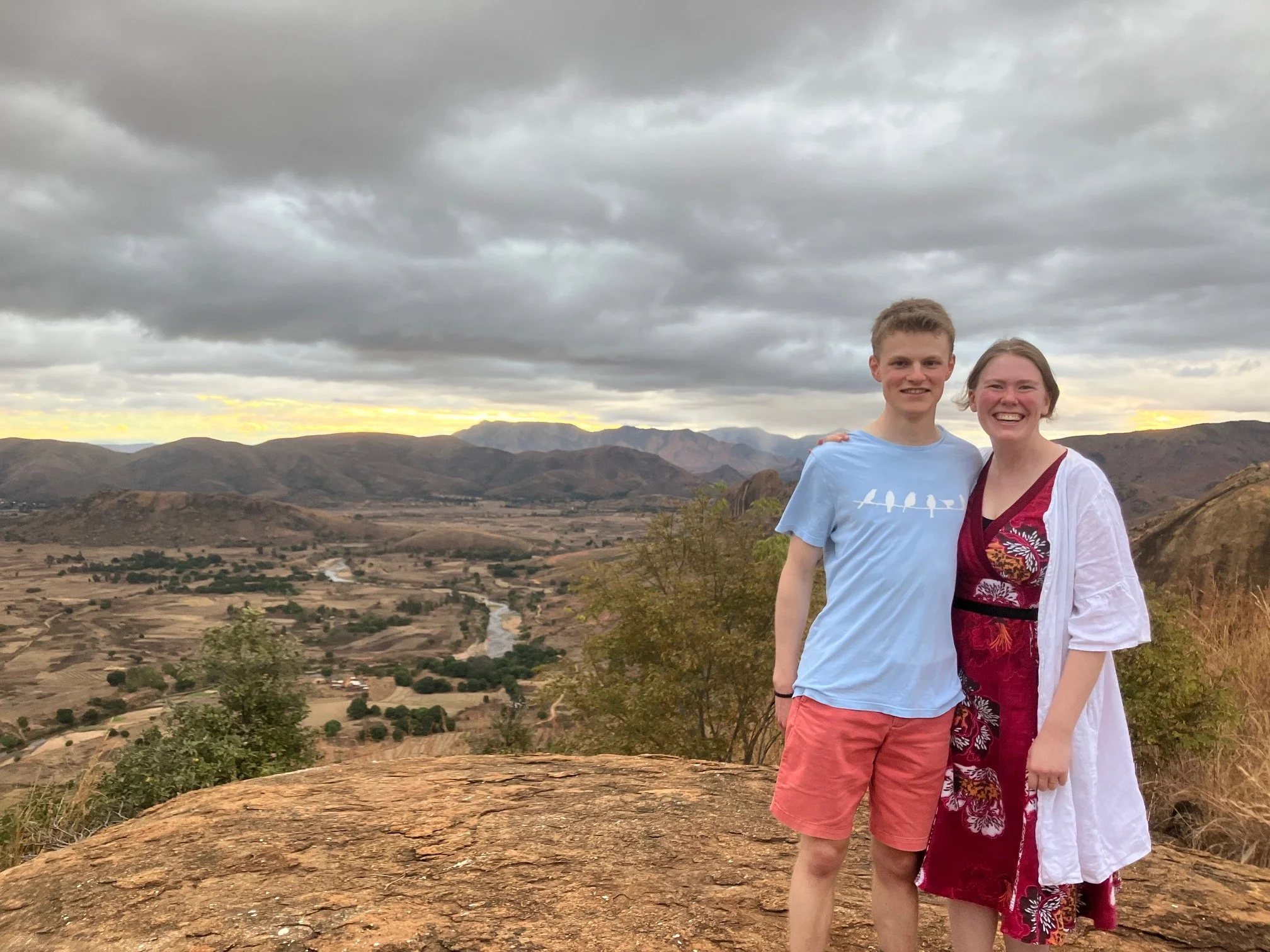
The main thing we would like to tell you is how kind, loving and godly the village Christians are. They have so little by way of resources, and extremely little education. A recent report in The Economist estimates that it would take 70 years for Madagascar to reach the level of development that Uganda has now. They’re a tiny number of believers facing real spiritual opposition. And they gave us a comfortable, clean house to sleep in for the night. And though we can barely get past “hello” in their language, they welcomed us right into the heart of their fellowship. Certainly a weekend to remember!
NORTHERN PRAYER DAY FOR MANDRITSARA
You are warmly invited to our Prayer Day on Saturday 10th October in Glasgow. The address is:
Crow Road Free Church, 29 Crow Rd, Glasgow G11 7RT.
It will also be possible to join online too, via a link which we'll circulate nearer the time.
We'll be praying from 2pm until about 5pm, with a break for tea/coffee etc halfway, and there will be lunch served from about 12:30pm for anyone who is attending in person.
We hope to see many of you there or online! Thank you as always for all your prayers for the work in Mandritsara throughout the year.