
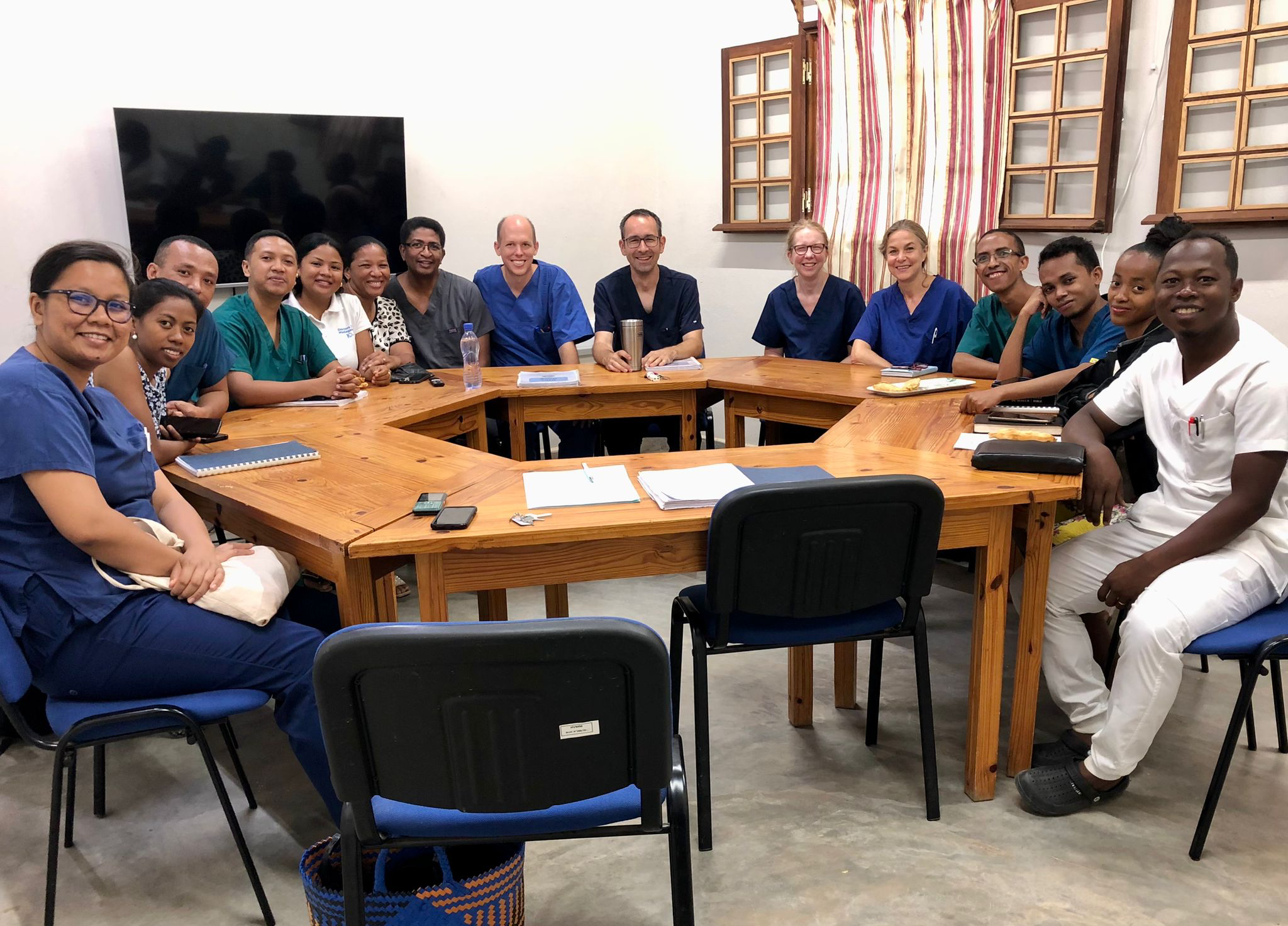
by Ted Watts, Missionary, Surgeon and Team Leader

Ted Watts
I want to share something of my family’s experience of serving as missionaries in Madagascar over these past eight years. My hope is that it will be useful to you-whether you’re in a similar situation, considering entering one, or simply needing encouragement about how God works through the ordinary and overwhelmed.
One of the most amazing and humbling parts of mission work is discovering that God chooses to use people like us: fragile, feeble, frequently out of our depth, and often unsure what to do. We learned that very quickly after arriving in Mandritsara.
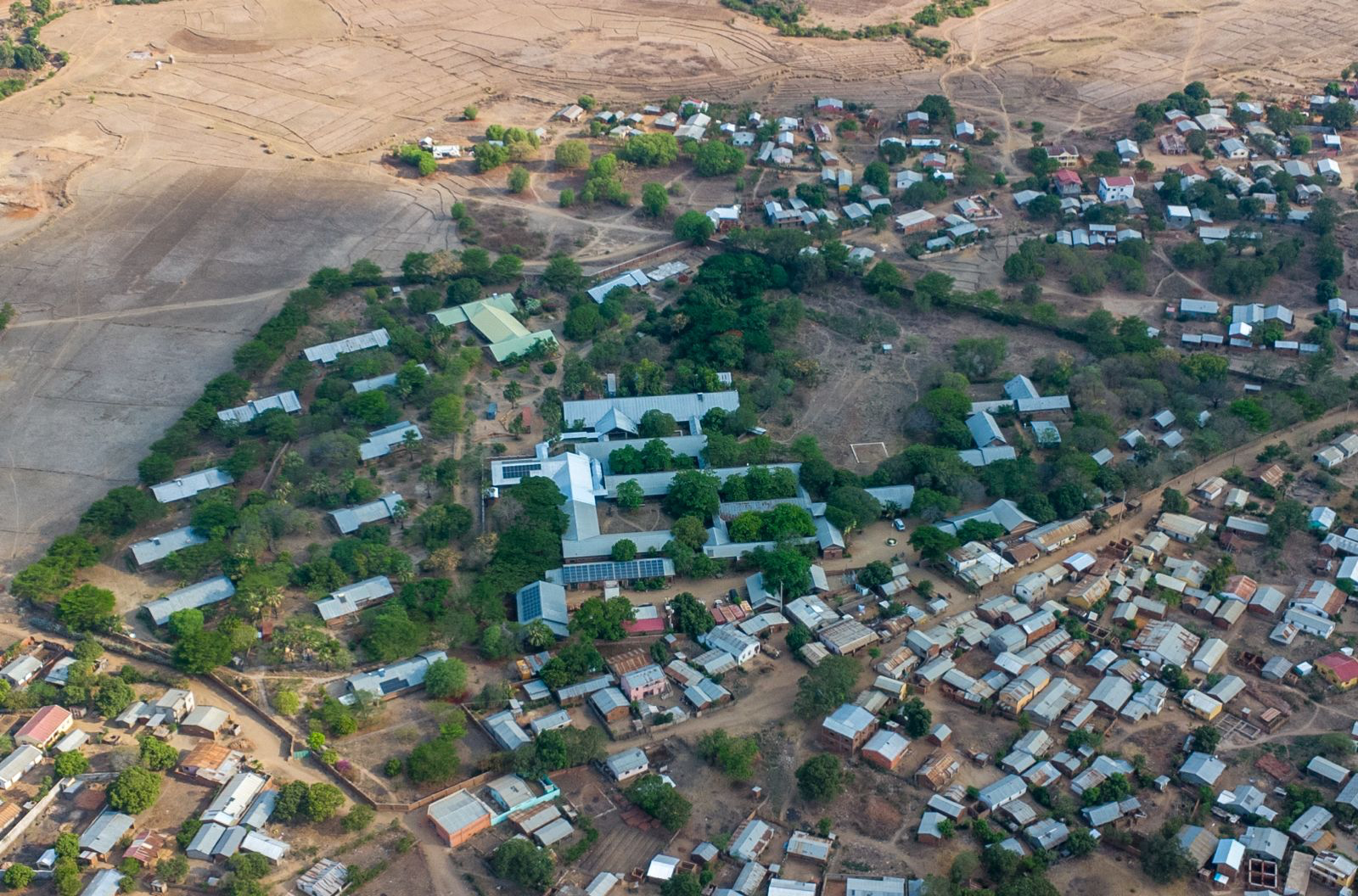
The Good News Hospital and adjacent village
A year into our time here, we learned that the two other missionary families we were serving with were leaving the field. They had each been here around ten years, and for various reasons it was the right time for them to move on. Both of the other surgical doctors I worked alongside-family practitioners who had learned surgery on the job in Africa-were leaving too. It all happened within weeks.
One day from that season stands out. At the time, our water supply was poor and unpredictable. The taps often stayed dry for days, so we kept them open overnight in the hope of filling buckets and barrels whenever water came. That particular day, we’d poured our last bucket into our filter-enough drinking water for perhaps a day. It was a low moment. What would we do if no water came?
Then there was a knock at the door. One of my surgical colleagues told us that he and his wife had also decided to move on.
That was it. We were going to be the only family left on the compound. Our children would be the only children on site. And I would be the only surgeon.
A friend visited us that day. When we explained what had happened, she asked the obvious question: “What are you going to do?” I could only say, “I don’t know.” Could we stay as the only family with young children in a remote corner of Madagascar, with no friends for them and no support for us? Could I keep going as the only surgeon doing more than 1,600 cases a year, on call 24/7? How would we ever take a holiday, go on home assignment, or even get a weekend off?
That evening, something remarkable happened. The taps were still dry, and we had just filled the filter with our last water. Suddenly a crack of thunder - and the heavens opened! Out of season. Not impossible, but unexpected. In Mandritsara, when it rains, it really rains. We ran outside, putting buckets under every downpipe. Everything filled to overflowing.
And in that moment, we sensed the Lord speaking so clearly: “You may not know what to do, but when you need water, I can make it fall out of the sky. When you need help - surgeons, workers, families - I can provide those too. Look to me. I can make your buckets overflow.”
Soon after, I was reminded of Jehoshaphat’s prayer in 2 Chronicles 20:12: “Lord, we don’t know what to do, but our eyes are on you.” That became our regular prayer.
This was in 2019. Before leaving for home assignment, one of the surgeons kindly stayed on a bit longer so we could go. While in the UK we decided to visit the US to tell people about the need for surgeons in Mandritsara. Missionary surgeons in the UK are quite rare; perhaps in the US we would find someone willing to come.
We went to the Global Missions Health Conference in Kentucky. Two things have stayed with me from that visit. First: after standing at a stall for the entire conference, not a single person expressed interest in long-term mission in Mandritsara. Five years later, none of those conversations has borne fruit.
But the second memory was even more striking. One evening they had a big missionary call - three or four thousand people in an auditorium, being asked to commit to missions. You were meant to write on a card where you were committing to go and walk it up to the front, placing it on a huge world map laid out on the stage. We climbed the steps to the platform. The map was already crowded with people, and we couldn’t see it until we reached the top. Then the person in front of me stepped aside, and I saw it: Africa was completely covered in cards. But just off to the right, the island of Madagascar - bare. Not one card. “What is going on? We’ve come all the way here specifically to tell people of the need in Madagascar and here there are literally a thousand people pledging to use their life in medical mission and not a single one of them wants to come to Madagascar!”
The next morning’s speaker referred to a passage from Numbers 20 - a moment late in the Israelites’ journey through the wilderness. Once again, the people are complaining, this time because there’s no water. Moses and Aaron go to God, and God tells Moses to speak to a rock, and water will flow out of it for the people to drink. But Moses, wearied and frustrated, gathers the people and says, “Listen, you rebels, must we bring you water out of this rock?” And then he strikes the rock - not once, but twice - and water gushes out.
But it becomes clear that something in Moses’ response has displeased God. And the speaker that morning helped us see what was at the heart of it. It wasn’t just that Moses struck the rock instead of speaking to it - it was the pronoun that he used: “Must we bring you water from this rock?” No, Moses. It’s not you who bring the water. It’s God. Always God. That was the lesson.
And in that moment, it was like a direct word for me. We had been working out how to respond to the crisis. What should we say? What should we do? How do we recruit people?
I’d not only been asking the question, must we sort out the issue in Mandritsara with there not being any families and no other surgeons, but I’d also got the answer for how to do it, to get on the plane, to go to GMHC to tell everyone about the problem, to recruit people to come. But with that empty map of Madagascar on the stage, and those verses from Numbers 20, God was saying to me, look, it’s not you who’s going to make this happen, it’s me. I am the one who can make water tumble out of the sky, I am the one who can make water gush from a rock in the desert, and I am the one who will meet the needs of the project in Mandritsara, not you.
We returned at the end of 2019 full of hope that help would come - some holiday cover, visitors, perhaps a family with children, a chance to attend a conference in Greece. Together with our church and our mission organisation, we had made a plan: If there are still no other families or surgeons in a year, we’ll probably have to go home.
Then 2020 happened.
COVID arrived. Borders closed. Every single thing we had put in place to make staying possible fell away. Visitors cancelled. Holidays evaporated. Flights were grounded. ICU beds around the world were overwhelmed. And Madagascar - thirty million people - had just ten ICU beds.
Air France announced their final flight. It felt like a now-or-never moment. Should we go? All of us? Should I stay while Rachel took the children home? Was it irresponsible to remain? Or irresponsible to leave?
We didn’t know what to do. But again - our eyes were on the Lord.
If we had left, then humanly speaking surgical services in Mandritsara would have closed-no caesareans, no hernia repairs, no trauma care. Hundreds of thousands of people left without access to surgery. Not for a few months- but maybe for years. God gave us the strength to stay.
Through that season we also realised something fundamental: it’s not sustainable to run surgical services on missionary surgeons alone. We needed Malagasy surgeons. But how? There are only around 100 surgeons in Madagascar. How many are evangelical Christians? How many willing to serve in a remote town like Mandritsara, not for high pay but as missionaries?
We realised we would need to train our own. That led us to PAACS. To begin, I had to qualify as a PAACS trainer, which meant sitting the COSECSA fellowship exam in Rwanda. I left Rachel and our two young children in the Addis Ababa transfer lounge at 1:30 a.m. so I could catch a flight to Rwanda; she flew on alone to the UK. For her, it was a harder moment than for me: “What is the point? Ted is just one surgeon, and to start PAACS we need three. Why can’t he just come home with us?”
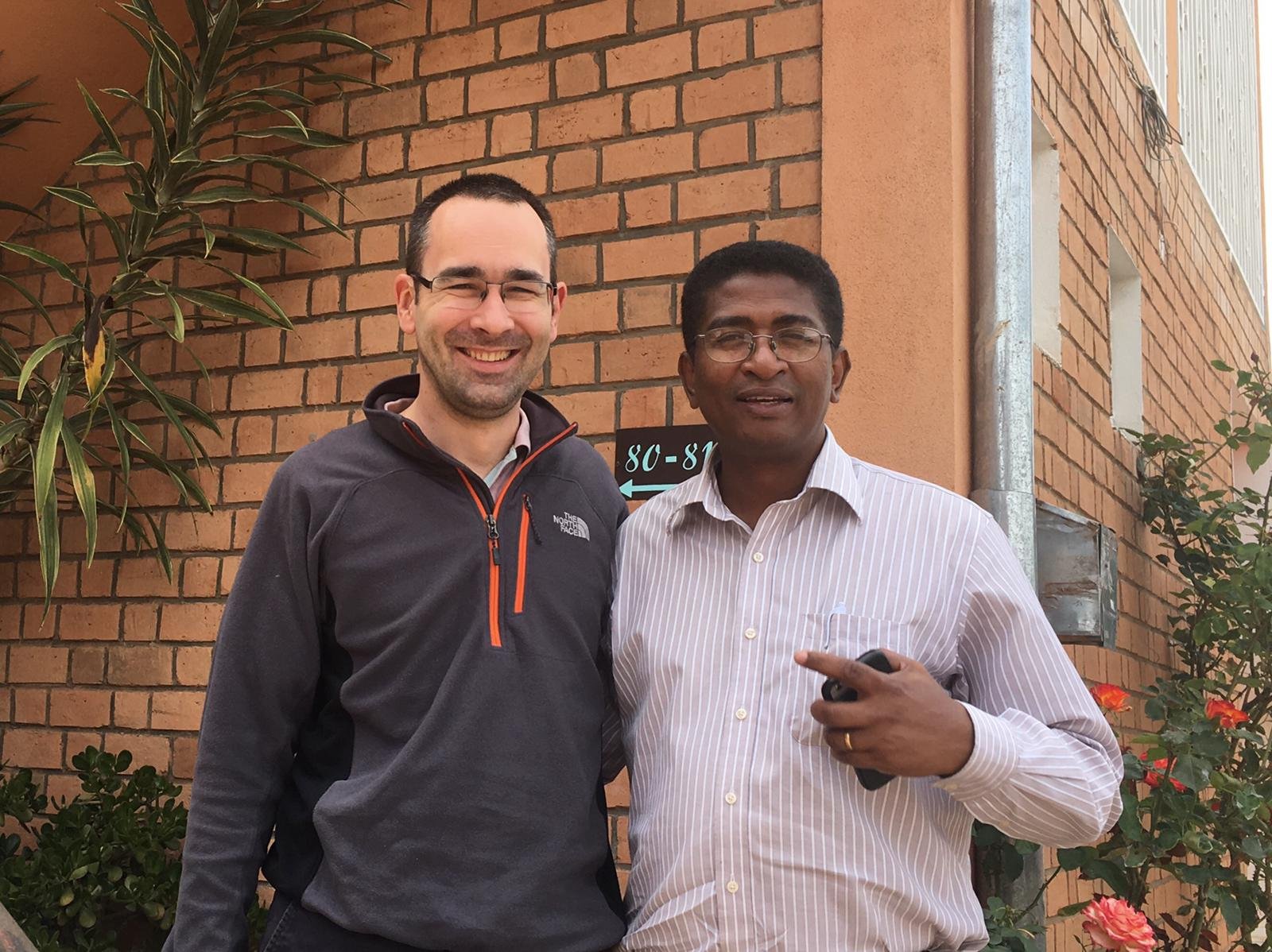
Ted and Marco
But in Rwanda, sitting that exam, I met two men who would change everything: Jesh Thiessen, a Samaritan’s Purse post-resident in Burundi, and Marco Fanariko, a Malagasy PAACS graduate doing fellowship training in Cameroon.
Not long afterwards, when Mandritsara felt empty - when I was the only surgeon and ours was the only missionary family on the compound-I received a message from Jesh: “Are you still looking for another surgeon?”
Yes. Of course we were!
Just after the COVID border restrictions lifted, Jesh and his family came. Hearing that Jesh was joining and knowing we needed one more surgeon to open a PAACS programme, Marco also decided to come.
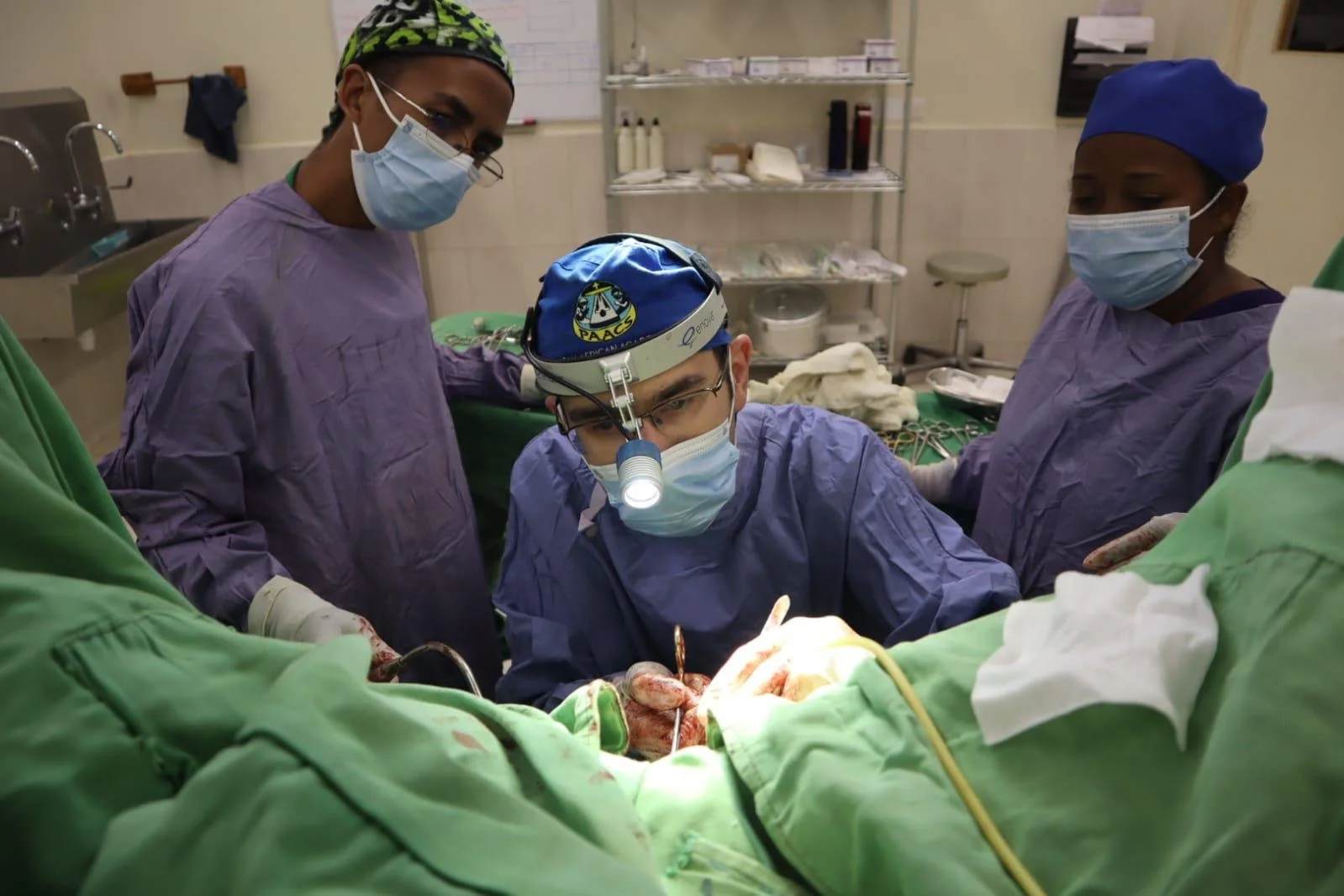
Ted teaching surgery
In January 2022 we opened our PAACS programme with our first two residents. That same year we opened our new surgical building-planned before COVID, built during it.
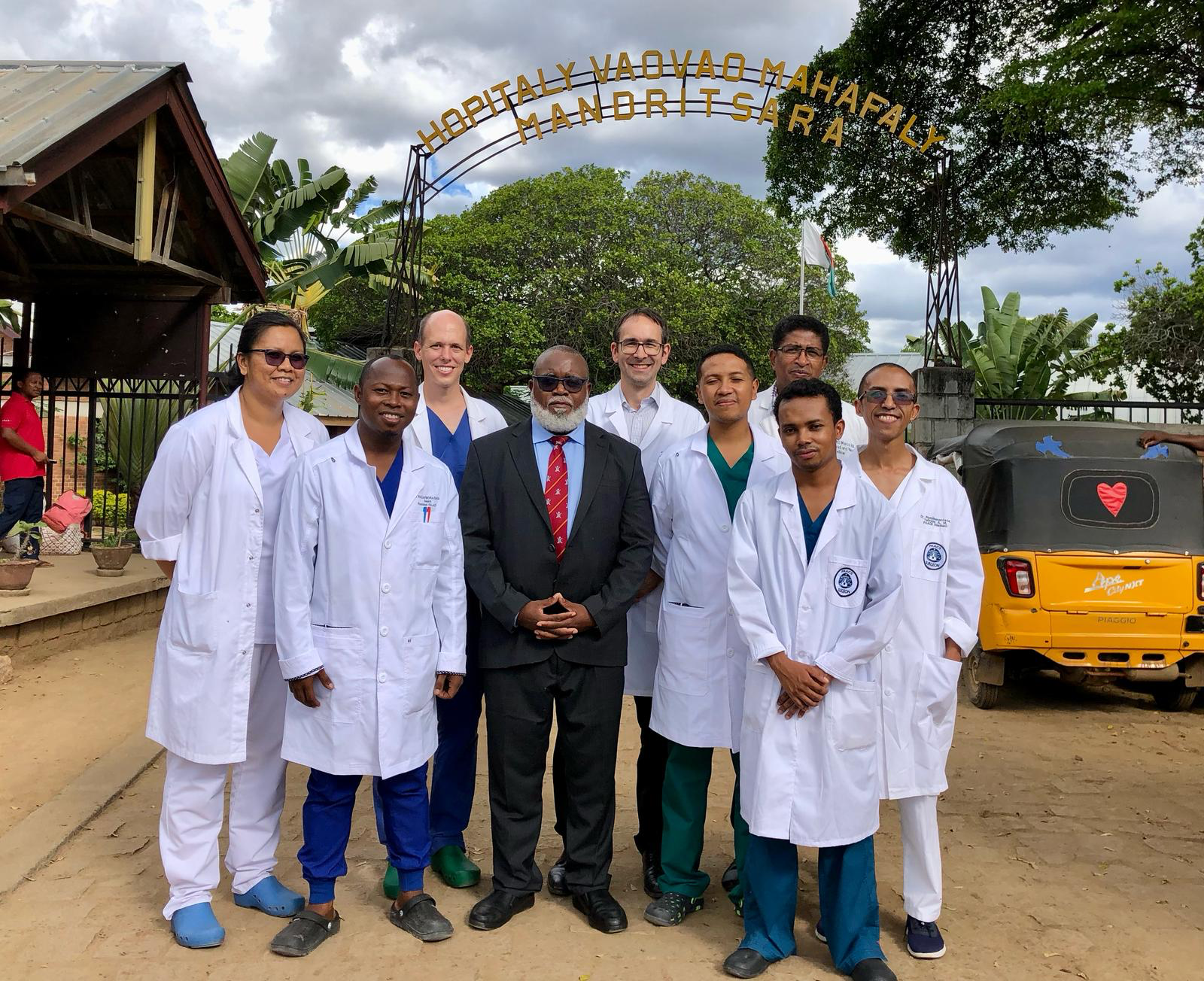
Surgeons and trainee surgeons with a visiting surgeon from Zambia
Now, by God’s grace, we have seven surgical residents (soon eight), three attending surgeons (Daniel from Switzerland, Marco from Madagascar, and myself), three missionary families with seven children, and seven or eight Malagasy families living on the compound - around thirty children in total.
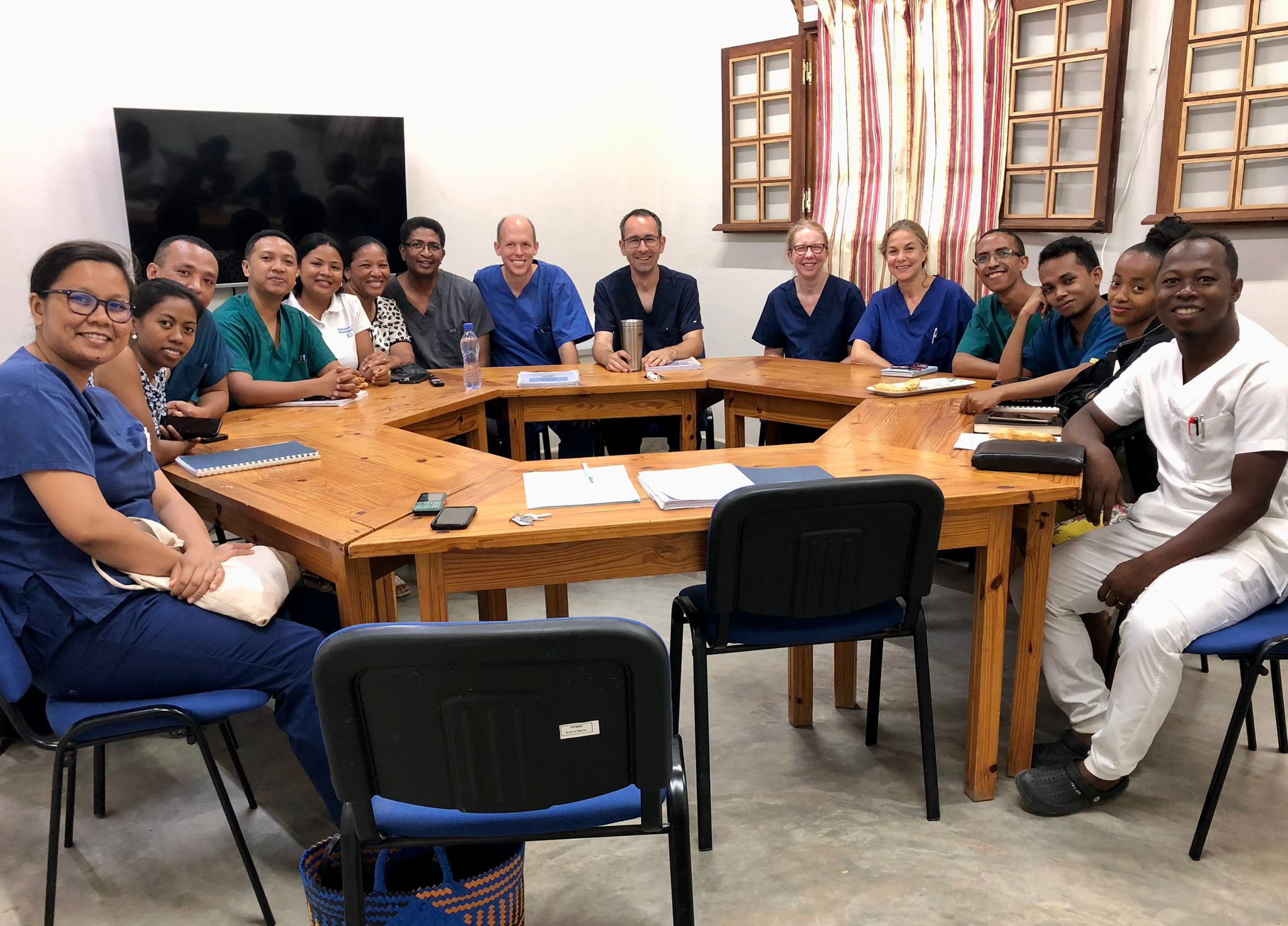
Surgeons and trainees Bible study
We’ve seen God’s provision - the water from the sky. The provision of everything we needed.
Thank you, Lord. May all the praise be for You!